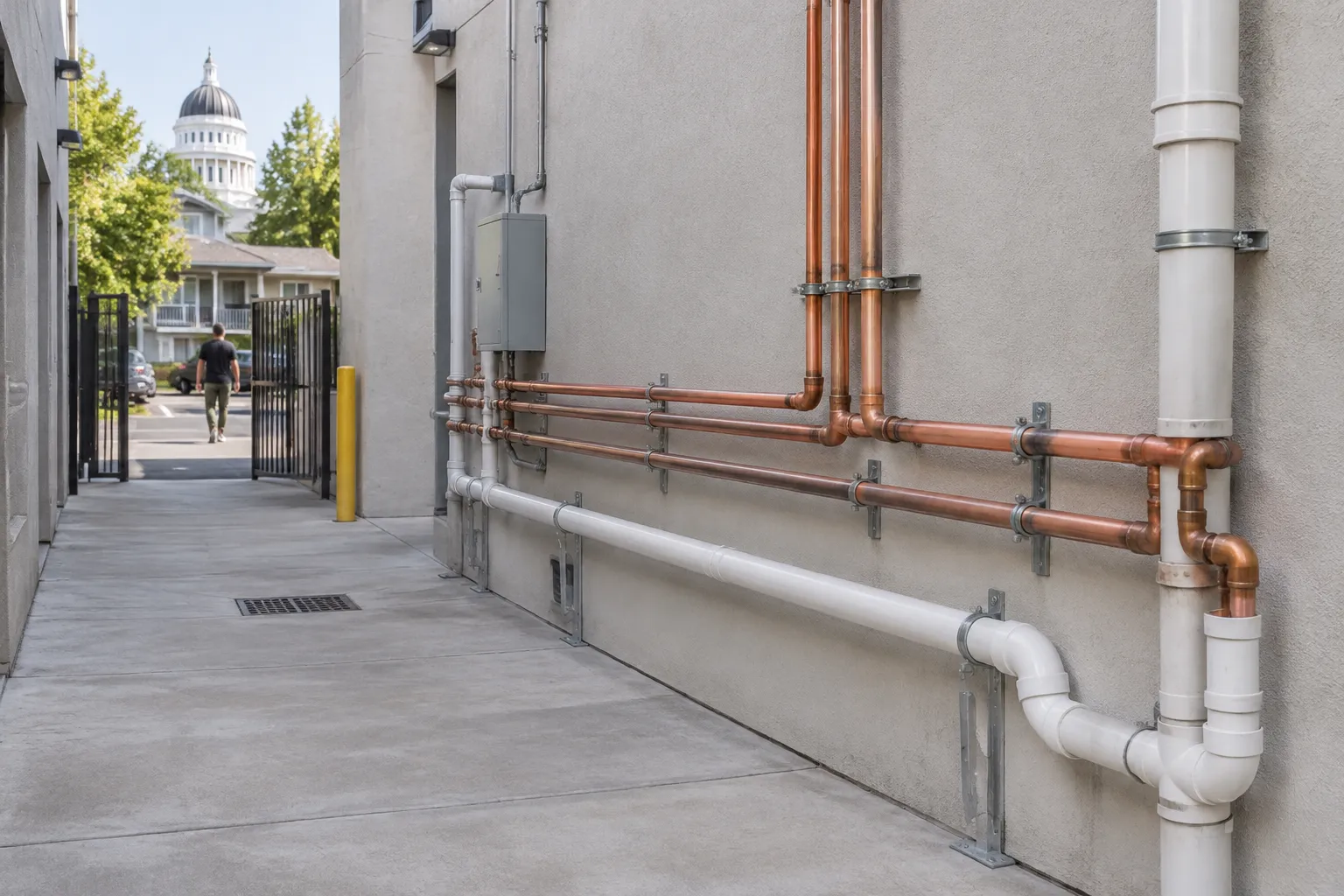
A commercial plumber works on the water, drain and gas piping of non-residential buildings such as shops, restaurants, offices, clinics and apartment complexes. The work differs from a house call: larger pipe sizes, more fixtures, tight deadlines around opening hours, and code requirements that homes do not face. One that comes up most is backflow testing, which the City of Sacramento says state rules require each year for backflow prevention assemblies. Fixr's plumber cost guide lists $75 to $150 an hour for plumbers, and Sacramento prices vary. To compare prices, you can get quotes from local specialists.
What does a commercial plumber do?
A commercial plumber installs, repairs and maintains plumbing in non-residential properties. Typical work includes clearing main drains, repairing restroom fixtures, servicing water heaters and boilers, fixing leaks in larger supply lines, installing and testing backflow assemblies, and maintaining grease and sand interceptors in kitchens and wash bays.
How it differs from residential work:
- Scale. Pipes are bigger, runs are longer and there are more fixtures per floor. Flush valve toilets, floor drains and commercial water heaters are common.
- Scheduling. Many jobs happen before opening, after closing or on weekends so a business does not lose trading time.
- Compliance. Health, fire and water-protection rules apply. Restaurants have kitchen drain and interceptor rules, and buildings with fire sprinklers or irrigation often have backflow assemblies.
- Permits. Most alterations need a permit from the City or County building department. The plumber pulls it and schedules the inspection. A tenant should check with the landlord before work starts.
- Responsibility. In a leased building, the lease decides whether the landlord or the tenant pays for pipes inside the walls and fixtures in the suite. Check it before you book.
For drain problems, a commercial plumber may use a camera and a jetter. See hydro jetting drain cleaning for how that works. Larger sewer line faults are covered under sewer line repair plumbers. Burst or failed lines in a shop call for the checks on our burst pipe plumber page.
What is backflow testing and who has to do it?
Backflow testing checks that the device protecting the public water supply from contamination still works. The City of Sacramento's cross-connection program says state regulations require property owners to have their backflow prevention assemblies tested every year by a tester holding a state-recognized certification. The County's rules also call for a test when an assembly is installed, repaired or moved.
What it means in practice:
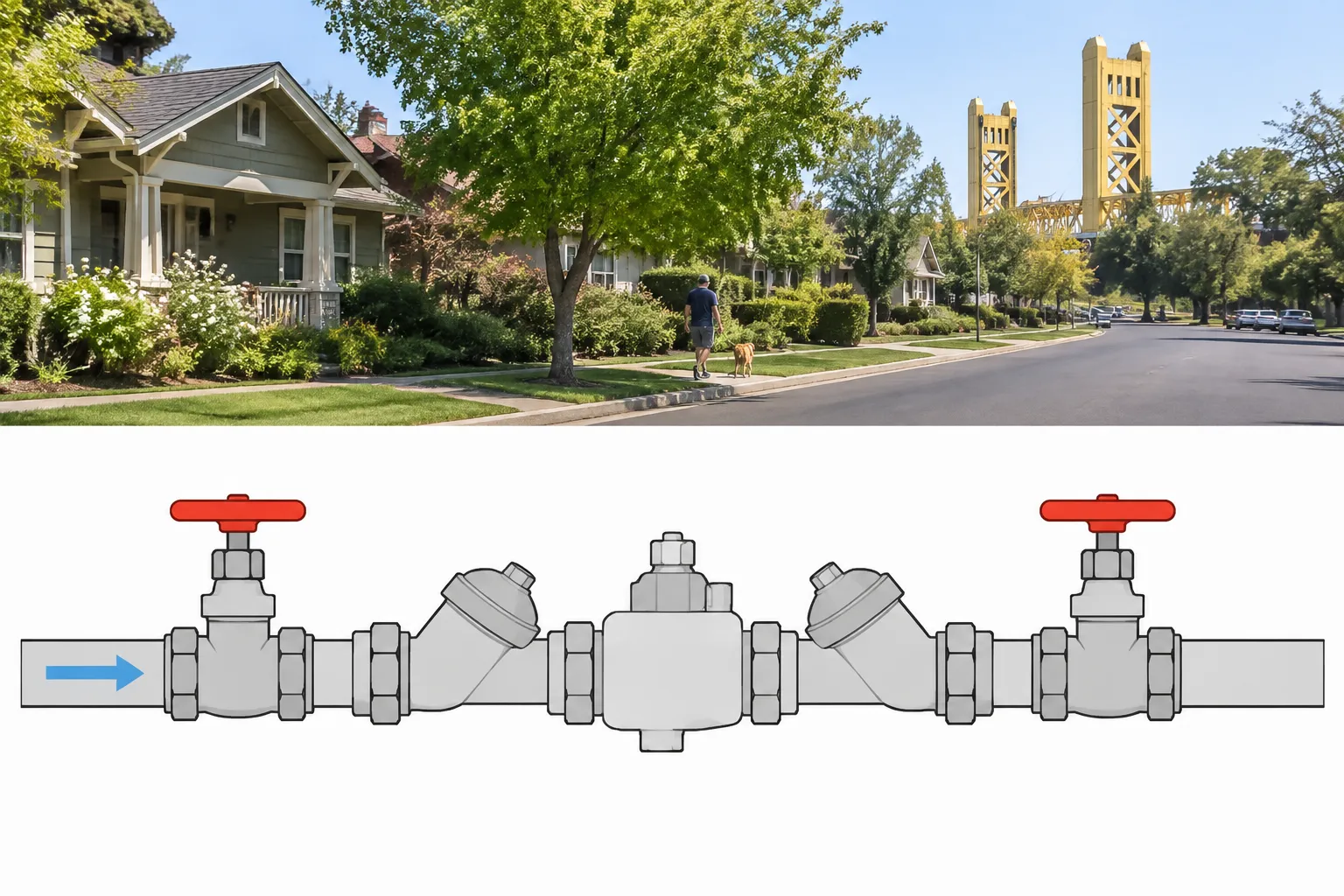
- What is a backflow assembly? A valve assembly, usually near the meter or on a fire line or irrigation line, that stops water from flowing backward from your pipes into the drinking water system. Commercial buildings have them more often than homes, because of fire lines, boilers, irrigation, carwashes, restaurants and chemical use.
- Who tests it? A person who holds certification for backflow testing from an organization recognized by the State Water Resources Control Board. In Sacramento, the City and the County publish lists of testers. Use someone on the list for your jurisdiction.
- How often? Every year, plus after installation, repair or relocation. The water supplier may also set a due date and send a reminder.
- What happens after? The tester sends the results to your water supplier, and you keep a copy. If the assembly fails, it must be repaired and retested.
- What if you do nothing? Water suppliers can follow up on overdue tests. The consequences are set by the supplier and local code, so ask them directly.
Testing is not the same as a plumber walking the building. A tester uses a calibrated gauge kit, and the County requires testers to calibrate theirs each year. Any tester you hire should be able to show current certification and county or city registration.
The cost side is on backflow testing cost, which breaks down the ranges. If you are not sure whether your property has an assembly, ask your water supplier, or look at the pipe where it enters the building for a bronze or steel valve assembly with two test cocks.
What affects the price of a commercial plumber?
Fixr's plumber cost guide (updated January 2025) lists plumber hourly rates of $75 to $150, with a national average of $90, and a service call fee of $50 to $300. Commercial work is often quoted by the job, with a minimum call-out. Backflow test fees are set by each tester, so ask for the price in writing, and a repair and retest costs more. Sacramento prices vary.
| Service | Typical range |
|---|---|
| Hourly service call, commercial | $75 to $150 per hour for plumbers (Fixr) |
What moves the price:
- Number and type of assemblies. Fire-line and large-diameter assemblies are costlier to test than a small irrigation device.
- Access. An assembly in a vault, on a roof or behind a locked yard takes longer than one at ground level.
- After hours. Night and weekend work often costs more. See 24 hour plumber for how after-hours billing usually works.
- Building age. Older buildings hide older pipe, mixed materials and unknown layouts.
- Permit and inspection. Larger work needs a permit, and the fee is added.
For the general residential figures, the plumber cost page gives context.
Signs your business needs a commercial plumber
Call a commercial plumber when you have recurring drain backups, restroom fixtures that fail, low pressure on upper floors, slow hot water, water stains in ceilings, an overdue backflow test notice from your water supplier, or any leak you cannot reach. Anything that closes the premises is an emergency. A small drip can wait for a scheduled visit.
Common triggers:
- A notice from the water supplier. A letter that your backflow test is due or overdue. Book a tester soon, since the list of testers can fill up near deadlines.
- Restaurant and kitchen issues. Grease backing up, slow floor drains, smells at the drain. Check with the City on interceptor rules.
- Restroom problems. Flush valves that hold open, toilets that clog on every use, leaking supply stops.
- Water heater faults. A shop without hot water cannot meet hygiene needs. See water heater repair for common faults.
- Building changes. A tenant fit-out, new restroom or kitchen needs plans, permits and inspection. Hire a contractor who does that work.
- Unexpected bills. A high water bill with no change in use can mean a hidden leak. Leak detection pricing shows what finding it costs.
For urgent problems after hours, see plumber emergency for what to do first.
How do you choose a commercial plumber?
Pick a business that does commercial work, holds a California plumbing contractor license (class C-36) and can name the permits and inspections involved. California requires a contractor license for work of $1,000 or more, and any work needing a permit needs one at any price. Check the number on the state board website.
Questions that separate the options:
- Do you do commercial jobs, or mostly homes?
- Can you show a current license, insurance and, for backflow, your tester certification?
- Is the permit in the price? Who schedules the inspection?
- Can you work outside opening hours, and is there an after-hours rate?
- Will you send the backflow report to the water supplier, and when?
- Can you give a written price before you start?
Ask the landlord who is responsible for the work if you rent. Get any approval in writing, so you are not billed twice. To see how a job usually unfolds, how a job runs explains the steps from quote to finish. You can also start from the Sacramento plumbing guide home page.
Questions people ask
How long does commercial plumber work take?
A routine service call takes one to two hours. A backflow test on one assembly usually takes under an hour, plus time to report. Repairs, drain jobs and fit-outs run longer. Ask for a schedule when you book, and for work outside business hours if you need to stay open.
What should I ask before I hire someone for commercial plumber work?
Ask whether they hold a California plumbing contractor license and can handle permits. Ask for a written quote with the call-out charge, hourly rate and any after-hours charge. For backflow, ask for tester certification and whether they file the results with the water supplier.
Do I need to be on site for commercial plumber work?
Someone with authority should be there, or you should arrange access with the property manager. The plumber needs access to the premises, shutoffs and any locked yards or roofs. For backflow, someone should confirm the assembly location and the water supplier account.
Is backflow testing required every year?
For backflow prevention assemblies, the City of Sacramento says state regulations require annual testing by a tester holding a state-recognized certification. The County also calls for testing after installation, repair or relocation. Your water supplier sets the due date, so check your reminder or ask them.
What is the difference between a commercial and residential plumber?
Commercial plumbers work on larger systems, higher fixture counts and code requirements specific to businesses, and they often work outside business hours. Some plumbers do both. For a business, ask about commercial experience in plain terms rather than assuming.
Can any plumber do backflow testing?
Not automatically. Testing needs certification from an organization recognized by the State Water Resources Control Board, plus local registration in Sacramento County. A plumber who is not on the City or County tester list can refer you to someone who is.
Read on
- Backflow testing cost
What backflow preventer testing costs in Sacramento: how to compare tester quotes, repair and replacement questions, and the annual…
Sources used
- City of Sacramento Department of Utilities, Cross-Connection Control
- Sacramento County Environmental Management Department, Cross-Connection Control
- State Water Resources Control Board, Backflow Tester and Cross-Connection Control Specialists Certification
- California Contractors State License Board, licensing requirements
- Cost to Hire a Plumber, Fixr (updated January 2025)
Last changed