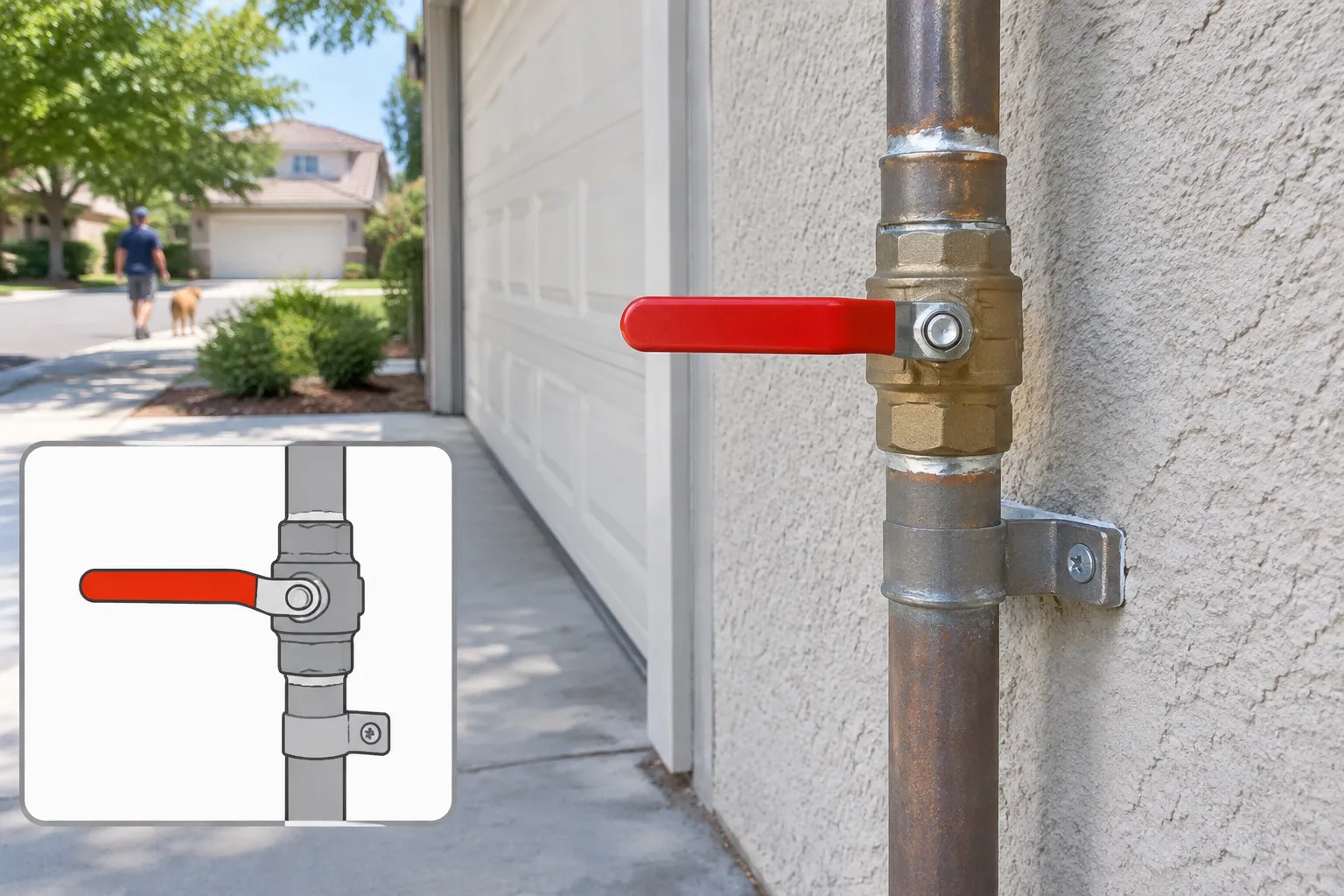
If you smell gas, leave the building and call 911 first, then PG&E's gas emergency line at 1-800-743-5000. For a burst pipe or heavy leak, shut off the water at the main valve, switch off the water heater and keep away from electrical outlets and the panel if they are wet. Then call a plumber. This page explains the order, what counts as a true emergency, what an after-hours call-out costs and how to hire someone without being rushed into a bad deal. You can also get quotes from local specialists once the water is stopped.
What should you do first in a plumbing emergency?
Make people safe, stop the water or gas, then call for help. The order is: gas smell means leave and call 911; water means shut the main; electricity near water means stay clear; sewage means keep out of it. Taking these steps before the plumber arrives limits damage and often lowers the bill.
If you smell gas or hear a hiss near a gas line or appliance:
- Get everyone out and move upwind.
- Do not flip light switches, use a flashlight, light a match or use a phone inside. PG&E says to avoid anything that could ignite gas until you are a safe distance away.
- From outside, call 911, then PG&E's gas emergency line, 1-800-743-5000.
- Do not go back in or try to find the leak yourself. Gas work is regulated, and a plumber does not enter until it is safe. Rotten egg smell is a common sign, but PG&E notes you cannot rely on smell alone.
If water is flooding or a pipe has burst:
- Shut off the main water valve. It is usually where the supply enters the house, near the meter or on a front or side wall, or in the garage. Turn a wheel handle clockwise; turn a lever handle a quarter turn so it sits across the pipe.
- Open the lowest faucet and flush toilets once to drain what is left in the pipes.
- Switch off the water heater. If it is electric, use the breaker. If it is gas, turn the gas control to pilot or off. A heater with no water in the tank can be damaged by running.
- Move valuables, lift rugs and photograph the damage for your insurer.
If water is near electricity:
- Do not wade through water that reaches outlets, appliances or the panel.
- If the panel is dry and you can reach it safely, shut off power to the affected area at the breaker. If you cannot reach it dry, stay clear and call 911 or the utility.
If sewage is backing up:
- Stop using sinks, tubs, toilets and the washing machine.
- Keep children and pets away. Sewage can carry germs, so wear gloves and boots if you must handle anything, and wash well afterward.
- Call a plumber for drain or main line work. Our page on drain cleaning covers what the visit involves.
Hire a plumber only after these steps. A quiet house with the water off is a better place to compare quotes than a flooded kitchen.
What counts as a plumbing emergency?
A plumbing emergency is any fault that threatens safety, floods or damages the property, or leaves you without a basic need. Gas smells, burst pipes, sewage backups, a failed water heater leaking onto the floor and no water at all qualify. A dripping tap, a slow drain and a running toilet can wait for business hours.
Call now for:
- A gas smell, which means 911 first.
- A burst or split pipe that keeps running after you shut a fixture. See burst pipe plumber for repair options.
- A water heater leaking from the tank or a relief valve discharging steadily. See water heater leaking and emergency water heater repair.
- Sewage coming up through floor drains, tubs or toilets.
- No water at all when the neighbors have water.
- Water running through a ceiling.
Can wait until morning:
- A faucet drip, a toilet that runs, a single slow drain.
- Low hot water volume or a pilot light that went out, when you have other means to wash.
- A clogged toilet when you have a second toilet in the home.
Frozen pipes are rare in Sacramento, where hot dry summers and mild winters mean only an occasional frost night. If one does freeze, shut off the water at the main before it thaws.
What are the different types of plumbers?
Plumbers differ by what they do day to day. Service plumbers repair homes and are the people you want in an emergency. Others focus on new construction, remodeling, drain cleaning, water heaters, gas piping or commercial buildings. For an emergency, choose someone who does residential repairs and is set up for after-hours calls.
- Service and repair. Leaks, fixtures, water heaters, drains and shutoffs. The usual emergency call.
- Drain and sewer specialists. Cameras, jetters and main-line work. See sewer line repair plumbers.
- Gas fitters. Gas lines and appliance connections. Gas work is regulated, and see gas line installation for the rules and who may do it.
- Remodel and new construction. Rough-in and fixtures. Rarely available at night.
- Commercial. Larger systems. See commercial plumber.
Each has its own expertise, but all of them work under a California contractor license. Plumbing falls under class C-36, which the state licensing board uses. The state requires a contractor license for jobs of $1,000 or more in labor and materials, and for any job that needs a permit.
What does an emergency plumber cost?
Fixr's plumber cost guide (updated January 2025) gives about $150 an hour as the standard emergency rate, plus an emergency call-out flat fee of $200 to $300. Fixr's drain cleaning article (October 2026) says after-hours, weekend and holiday work often runs 1.5 to 2 times the standard rate. A burst pipe repair, a water heater swap or a main line clearing is priced on top. Sacramento prices vary, and the plumber quotes the actual cost.
| Item | Range in the cited guide |
|---|---|
| After-hours call-out and diagnosis | $200 to $300 flat call-out fee (Fixr) |
| Hourly labor, emergency or weekend | About $150 (Fixr) |
| Simple repair, such as a split supply line | $150 to $350 for a leaking pipe (Fixr) |
| Main line drain clearing | $350 to $650 to unclog a main sewer line (Fixr) |
| Larger repairs or replacements | Quoted per job |
What moves the price:
- Time. Nights, weekends and holidays are often higher than the weekday rate.
- The job. Stopping a leak is cheaper than replacing the pipe, heater or fixture behind it.
- Access. Slab leaks, buried lines and crawlspace work take longer.
- Parts and permits. Larger replacements need a permit from the City or County building department, and the fee is added.
Ask for the call-out charge and hourly rate before the plumber starts, and for a written quote before any work above the first repair. For daytime figures see how much a plumber costs. Insurance may cover sudden water damage, though not always the pipe itself, so photograph everything and call your insurer.
How do you find a good plumber when you need one now?
Pick a business that gives a price before arriving, shows a California contractor license number you can verify, and explains the repair in plain words. Do not pay a large deposit before work starts. A calm minute checking the license on the state board's website avoids most bad outcomes.
A short checklist:
- Ask for the call-out fee, hourly rate and any after-hours charge on the phone. A business that will not say is a warning sign.
- Verify the license. Look up the number on the state licensing board's site. Check the status and the plumbing classification.
- Be wary of arrival promises. No one can tell you for certain how long they will take at 2 a.m. Treat a stated time as an estimate.
- Ask what is included. Diagnosis, first hour, parts, disposal, permit.
- Get the price in writing before work beyond the emergency stop. Photos of the problem and a written scope protect you.
- Be careful about pressure. An honest plumber stops the water first and then explains options. Walk away from anyone who insists on a full replacement before they have shown you the fault.
Your home page is a place to start comparing local specialists, and the steps of a typical job are on how a job runs. For a daytime view of your options if the problem is not urgent, see the 24 hour plumber page.
Questions people ask
How long does a plumber emergency visit take?
A visit to stop a leak and secure the home often takes one to two hours. The repair itself can take longer. Replacing a pipe, a heater or a section of drain may need a second visit for parts. Treat any arrival time as an estimate, since no one can promise exact timing.
What should I ask before I hire someone for a plumber emergency?
Ask for the call-out fee, hourly rate and any after-hours charge. Ask for their California contractor license number and whether a permit is needed. Ask what the first step will cost, and whether they will give a written quote before they go further.
Do I need to be home for a plumber emergency?
Yes, in most cases. Someone should let the plumber in, show them the main valve and the damage, and agree the price before work begins. If you cannot be there, arrange access in writing, with a person you trust on site.
Should I call 911 or a plumber first?
Call 911 first for a gas smell, a fire, sparks, or if water has reached the electrical panel and people could be in danger. Call a plumber first for a burst pipe, a leaking heater or a backed-up drain, once you have shut off the water.
Where is my main water shutoff?
Look where the supply pipe enters the house: near the water meter, on an outside wall facing the street, in the garage, in a utility closet or under the kitchen sink. Find it before you need it, and test it once a year so the handle is not stuck.
Does insurance cover a plumbing emergency?
It depends on your policy. Many homeowners policies cover sudden, accidental water damage, but not the cost of fixing the pipe itself or damage from long-term leaks. Photograph everything, keep receipts and call your insurer as soon as the water is stopped.
Sources used
Last changed