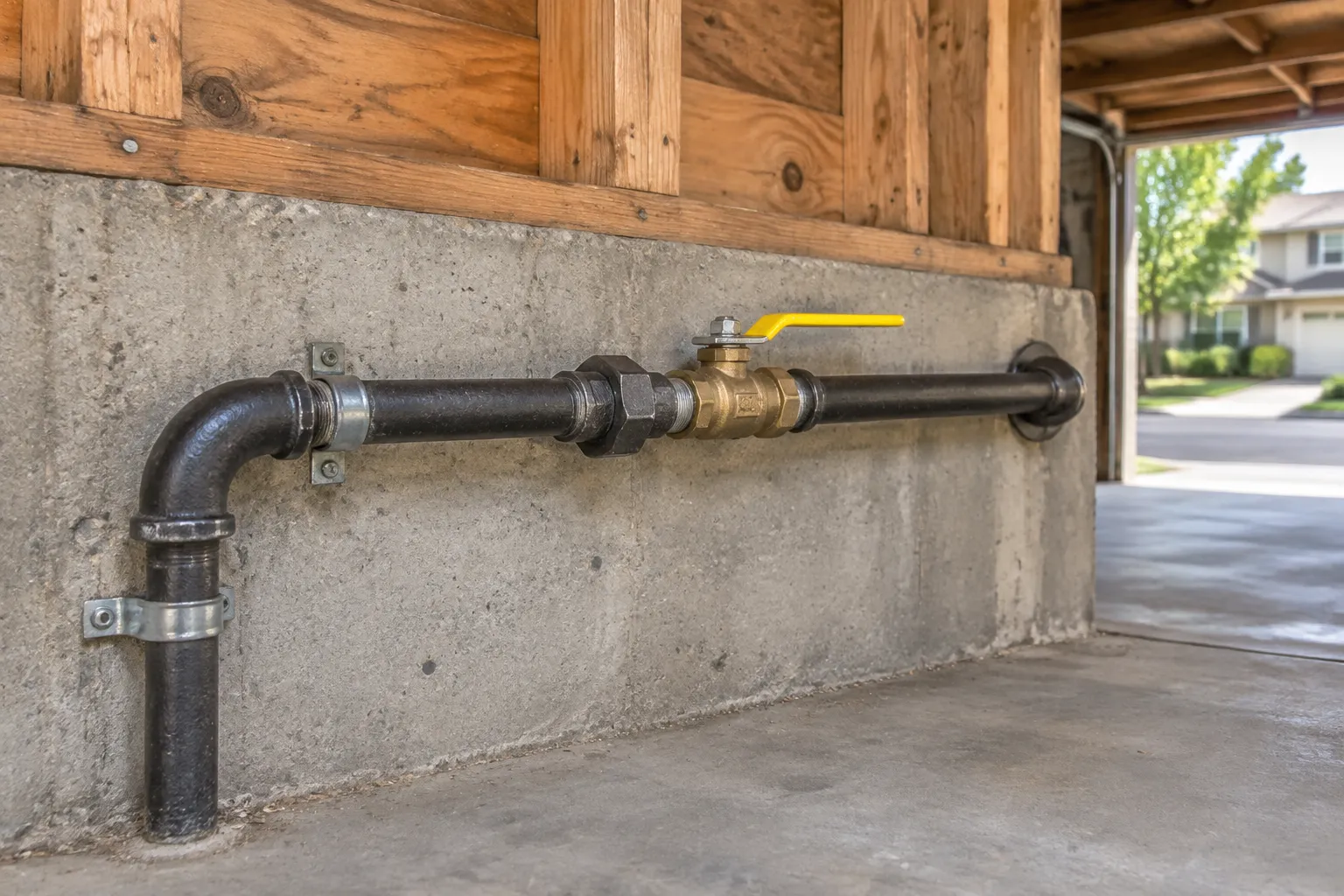
A gas line installation runs a new pipe from your meter or an existing line to an appliance such as a range, dryer, grill, fire pit or heater. California treats it as regulated work. The Contractors State License Board lists gas piping under the C-36 plumbing classification, and the City of Sacramento issues permits for it. Typical short runs to a range or grill cost a few hundred dollars up to about $2,000, depending on length and access.
What does a gas line installation involve?
A plumber plans the route, sizes the pipe for the appliance load, pulls the permit, installs the line with the correct fittings, adds a shutoff valve and a sediment trap where required, then pressure tests it and arranges inspection. Only after it passes is the appliance connected and lit. The utility handles anything at or before the meter.
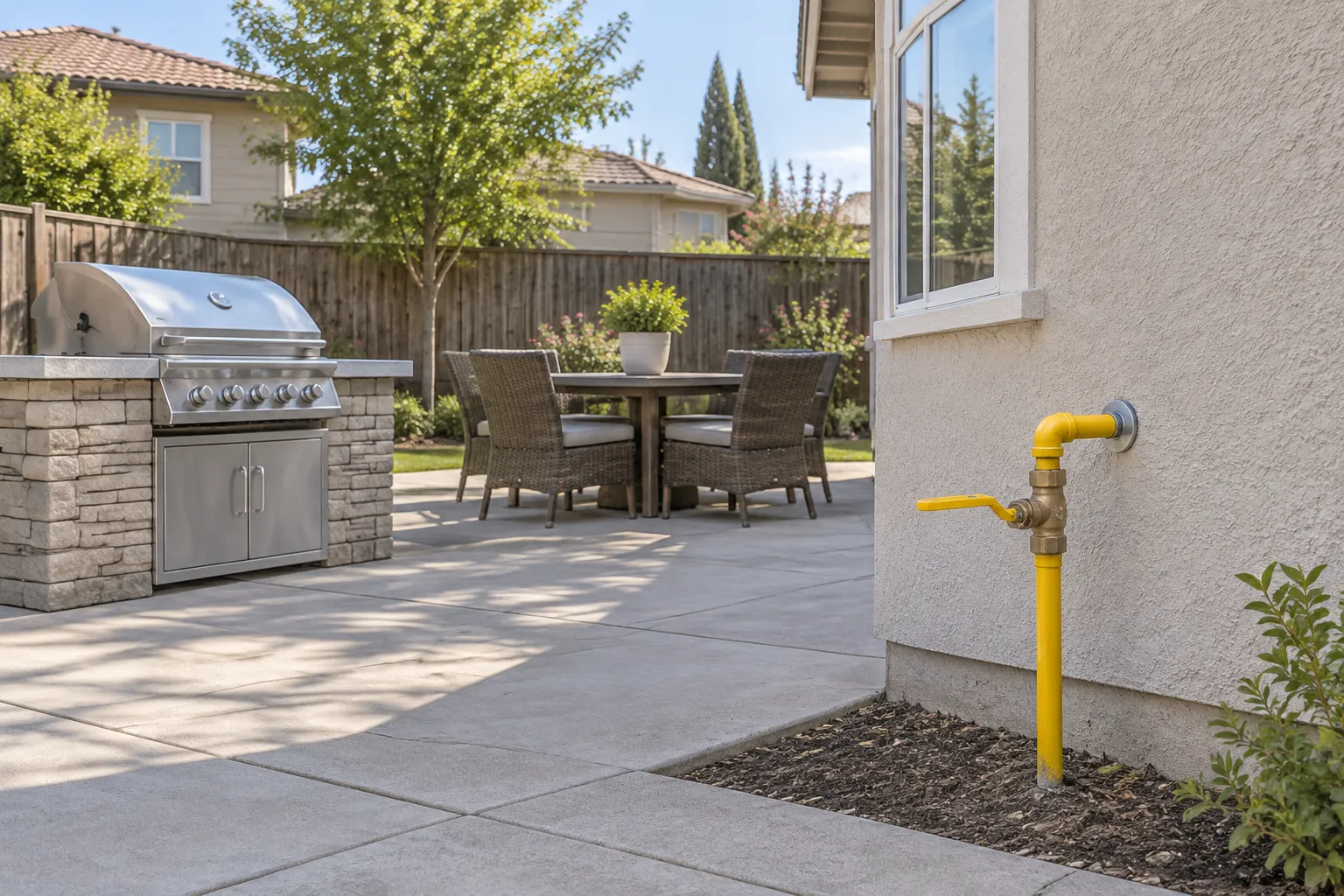
The usual steps:
- Load and route. The plumber adds up the appliance ratings, measures the run from the meter or an existing branch and picks a route through a wall, ceiling, crawl space or trench.
- Pipe choice. Common materials are black steel pipe, flexible corrugated stainless steel tubing and, for buried runs, approved plastic or coated steel. Flexible tubing has bonding and installation rules that trained installers follow.
- Shutoff and sediment trap. A shutoff valve sits close to the appliance, and many appliances need a sediment trap, also called a drip leg, to catch debris.
- Permit and inspection. The city or county inspects before walls are closed or the line is buried.
- Pressure test and leak check. The installer tests the new line and checks every joint.
- Appliance hookup and light-off. The appliance is connected and checked.
This is not a place for shortcuts. A poor joint can leak gas into a wall, with a risk of fire, explosion or carbon monoxide.
Who can legally install a gas line in California?
A plumbing contractor with a California license, the C-36 classification, should do it. California requires a contractor license for jobs of $1,000 or more in labor and materials, and for any job that needs a permit. The CSLB scope for C-36 includes gas piping, gas appliances, flues and connections. Some narrower specialty classes, such as C-61 limited specialty, exist, so ask what the license covers.
Check the license number on the state board lookup before you agree to anything, and ask for it in writing. The work should be done under permit, with an inspection. Homeowners may do some work on their own home, but gas piping carries the highest consequences if it is wrong, and the building department decides what it accepts, so ask the City of Sacramento or the county before you start. This guide does not give do-it-yourself steps for gas.
If you smell gas, leave the building, move upwind and call 911, then PG&E at 1-800-743-5000. Do not use switches or anything that could spark until you are away. PG&E is the gas utility for most of the Sacramento area, and it controls the meter and the service line up to it.
Does a gas line installation need a permit in Sacramento?
Yes, you should expect to need one. The City of Sacramento lists plumbing and mechanical work among the work that requires a permit, and its page on a new residential gas line says the city permit covers the onsite work, with PG&E involved if a tap or meter change is needed. Check with the city or county building department for your address, because rules differ by jurisdiction.
A permit means an inspector checks the work. That protects you, because a leak in a wall may not show up until later. It also matters for insurance and resale, since unpermitted gas work can cause trouble at both. Ask your plumber who pulls the permit and whether the fee is in the quote.
What does gas line installation cost?
Fixr's plumber cost guide (updated January 2025) lists $500 to $2,000 to install a gas line, and Fixr's gas line repair guide (updated August 2025) lists $23 to $35 per linear foot to replace a gas line and $3,000 to $8,000 for all-new gas lines in a house. Cost rises with length, trenching, opening walls, the number of appliances and permit fees. Check the actual permit fee with the city. Sacramento prices vary. The plumber quotes the real price.
| Job | Typical range | What drives it |
|---|---|---|
| Short run to a range or dryer | $500 to $2,000 (Fixr plumber guide) | Distance, access, shutoff and trap |
| Outdoor grill or fire pit line | Priced by the job, ask for a written quote | Trenching, buried pipe, length |
| New line for a heater or pool equipment | Often higher | Load, size of pipe, distance |
| Per linear foot | $23 to $35 to replace a gas line (Fixr) | Material, labor, access |
| Permit | Ask the city for the current fee | Jurisdiction and scope |
For the cost in more depth, see gas line installation cost. The plumber cost guide shows how hourly rates and minimum charges work, and how much a plumber charges per hour covers the labor side.
Natural gas or propane, and which jobs are common?
Many Sacramento homes are served by natural gas through PG&E, and the line runs from the meter. Propane is stored in a tank, used where there is no gas main, and needs its own regulator and rules. The common jobs are a range, a dryer, a grill, an outdoor fire feature, a fireplace, a pool or spa heater, and a tankless water heater.
Some details by job:
- Kitchen range. Moving from electric to gas means a new line, a shutoff and ventilation planning. Ask the plumber about the gas line to the range location, and about whether the oven vent and clearances are right.
- Outdoor grill or fire pit. Usually a buried or wall-mounted line with a quick-connect shutoff. Digging must be marked first. Call 811 at least two working days before anyone digs. The service is free.
- Pool or spa heater. Often a larger pipe because the load is high. Ask for the sizing calculation.
- Tankless water heater. Needs a larger gas line than a tank unit, and sometimes a bigger meter. See tankless water heater installation for that.
- Propane. Needs a tank, regulator and the right pipe material. A propane supplier and a plumber often work together.
- Restaurants and shops. Commercial gas work involves bigger loads and extra rules. The commercial plumber guide covers that area.
How do you know a gas line job is right?
Look for a clear written scope, a license number, a permit in the plumber's name and an inspection date. Ask what pipe and fittings they will use, where the shutoff and sediment trap go and how they will test the line. After the job, you should be able to see a signed inspection card or a permit record.
Warning signs: a plumber who says no permit is needed, who will not give a license number, who asks for a large cash deposit up front, or who wants to connect the appliance before inspection. If anything smells off after the work, leave and call PG&E.
For other plumbing topics in your area, the Sacramento plumbing guide home page lists related guides, and the quote page lets you ask local specialists for prices.
Questions people ask
How long does a gas line installation take?
A short run to a range or dryer often takes a few hours once the permit is in hand. A longer run, a buried line or new work behind walls can take a day or more. Inspection is scheduled separately and may add days before the line can be used.
What should I ask before I hire someone for a gas line installation?
Ask for the license number and verify it with the state board. Ask who pulls the permit, what pipe and fittings they use, how the line is tested, whether the price is fixed and what it includes. Ask about a sediment trap and shutoff valve, and get the answers in writing.
Do I need to be home for a gas line installation?
An adult should be present when the work starts, to approve the route, and during the inspection and light-off, which are the final safety checks. The gas will be off to the appliance during the job, so plan around cooking or heating needs. Keep pets and children away from the work area.
Can I install a gas line myself?
California allows some owner work on a home, but gas piping needs a permit and inspection, and a mistake can cause fire or poisoning. The state licensing board lists gas piping under plumbing contractors. This site does not give do-it-yourself steps for gas. Ask the building department what it accepts, then hire a contractor.
What is a sediment trap and do I need one?
A sediment trap, also called a drip leg, is a short vertical section of pipe near an appliance that catches dirt and moisture before it reaches the burner. Many appliance makers and codes call for one. Your plumber will know the local requirement and should include it in the quote.
Read on
- Gas line installation cost
What a new gas line costs in Sacramento: per-foot and per-job ranges for stoves, dryers, grills and propane, plus PG&E, permit and safety…
Sources used
Last changed