For most Sacramento homes, PEX wins on price and speed, and copper wins on long record and rigidity. Fixr's plumber cost guide puts a repipe of a 2,000 square foot house at $4,000 to $12,000 without splitting out pipe material. Both are used as water supply piping in new homes and in whole house repiping, and either can last decades if installed well. The right pick depends on your budget, water and house.
What is the difference between PEX and copper?
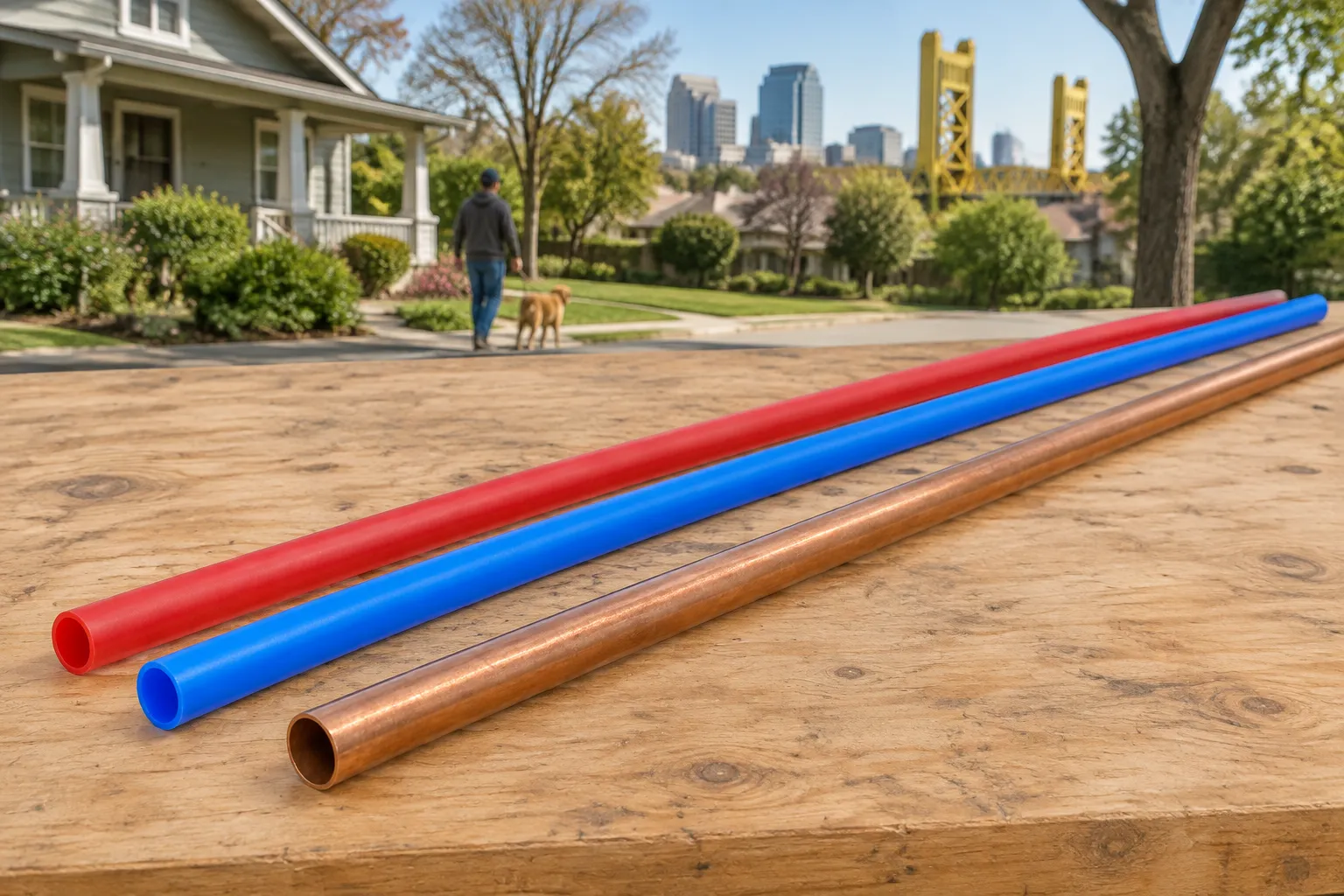
PEX is flexible cross-linked polyethylene tubing, sold as PEX-A, PEX-B and PEX-C, in red, blue and white. Copper is rigid metal tubing, joined by soldering or press fittings. PEX bends around corners and needs fewer joints. Copper holds its shape, resists heat and sunlight, and has been used in houses for generations.
In practice:
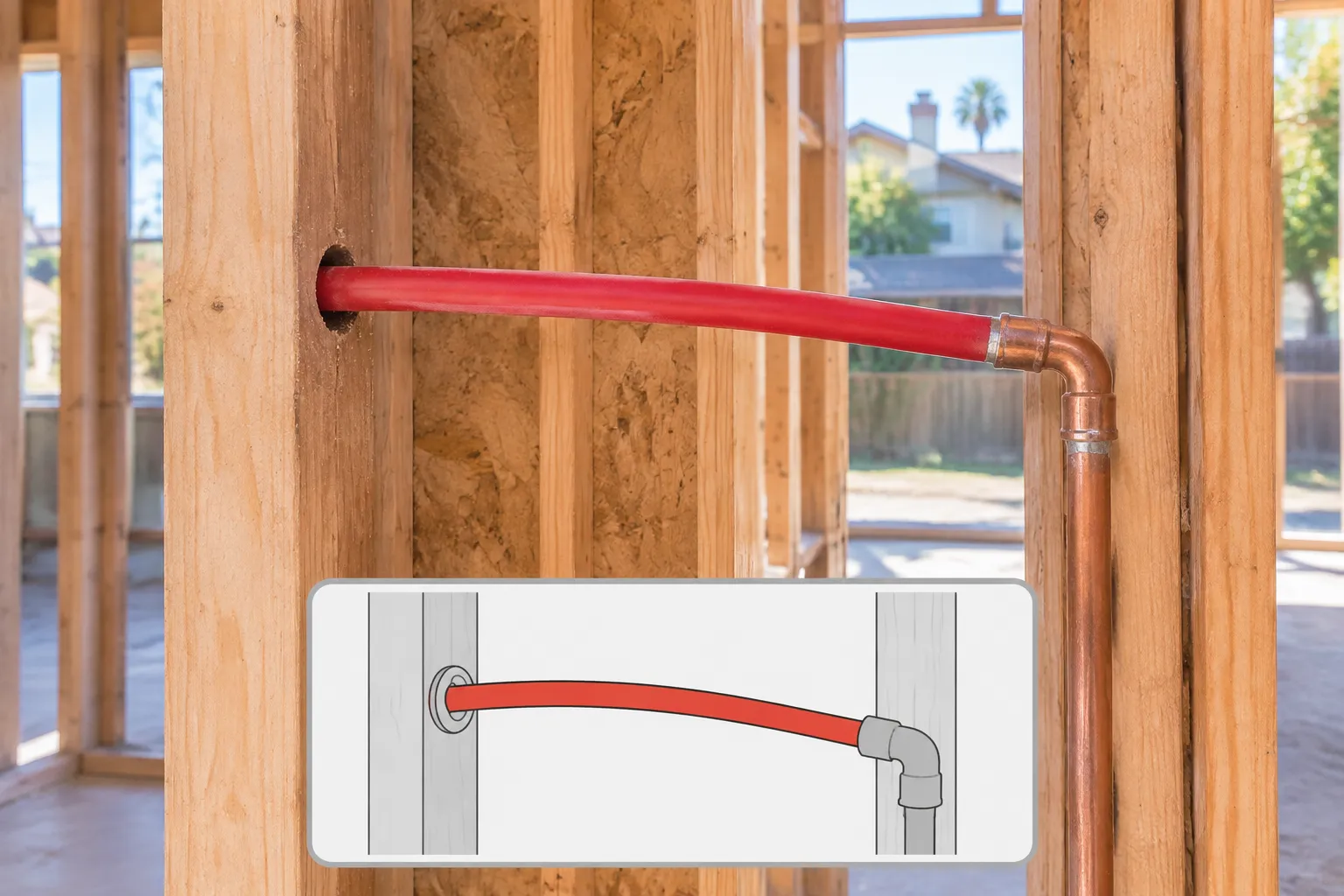
- Installation. PEX can be pulled through walls with small openings. Copper needs more cutting and joints, which means more labor.
- Joints. Each joint is a possible weak point, so fewer joints is a plus for PEX. Copper joints are reliable when made well.
- Rigidity. Copper stays in place and is easy to inspect. PEX needs clips and supports.
- Source of failure. Copper fails by corrosion or pinholes, and PEX fails from poor fittings, chemical or sunlight exposure, or damage.
Neither is a bad choice. The skill of the installer often matters more than the material.
Which costs less, PEX or copper?
PEX is widely described as faster to install than copper, which can lower labor. Fixr's plumber cost guide (updated January 2025) puts a repipe of a 2,000 square foot house at $4,000 to $12,000 and does not split the price by material, so ask each plumber to quote both pipes. Two stories, tight access, many bathrooms and drywall patching push the price higher. The plumber quotes the real price.
| Factor | PEX | Copper |
|---|---|---|
| Pipe cost per foot | Lower | Higher, and it moves with the metal market |
| Labor time | Shorter | Longer |
| Typical whole house repipe, about 2,000 sq ft | $4,000 to $12,000 (Fixr, not split by material) | $4,000 to $12,000 (Fixr, not split by material) |
| Fittings | Crimp, clamp or expansion | Solder or press |
| Cost variability | Lower | Higher |
Fixr does not price PEX and copper separately, so get written quotes for each. The repipe house cost page breaks the price down further, and the plumber cost guide gives wider context. Hourly charges are covered in what a plumber costs per hour.
How long does each one last?
Copper has the longer track record, and PEX is the newer material, so no one can give an exact lifespan for either. Water chemistry can shorten both: aggressive water can pit copper, and some disinfectants can age plastic faster. Installation quality matters. Treat the numbers as estimates, and ask the plumber about any warranty on parts and labor in writing.
Pinhole leaks in copper are a common reason owners consider a repipe. If you already have several, the pipes may be failing and a project to replace them can pay off. PEX has a shorter history, though it has been used in the United States for decades. Check the product's listing and the manufacturer's stated rating.
How do PEX and copper compare on flow and pressure?
Copper usually has a slightly larger inside diameter than PEX of the same nominal size, so a half inch PEX line carries a little less than a half inch copper line. In a house this rarely matters, because lines are sized for the fixtures, and plumbers use three-quarter inch mains or manifolds where needed. PEX fittings can narrow the opening, which is one reason installers size up.
If you have weak pressure now, the cause may be a failing line, a clogged filter or the regulator, not the material. See the guide to low water pressure before you decide on a complete repipe.
Which is better in freezing weather?
PEX tolerates freezing better, because it can expand slightly with ice and return, while copper has no give and tends to split. PEX is not freeze-proof, though, and a long hard freeze can still damage it. In Sacramento the question is minor, since nights at or below 32 degrees Fahrenheit are uncommon.
For a house here, the places that matter are an unheated crawl space, a garage wall or an outdoor line. Insulation does more than switching materials. If one of those lines is the only reason you are comparing, see the frozen pipe plumber guide and consider foam sleeves first. If a pipe has split from any cause, burst pipe plumber explains the steps.
What are the other differences that matter?
Heat and fire: copper does not burn and PEX does, so PEX must be protected where codes require. Sunlight: PEX must be covered, because UV damages it. Chemicals: some solvents and petroleum products can harm PEX. Pests: rodents may chew PEX. Taste and water quality: both are used for drinking water and are designed for it, and your local water report is the place to check supply quality.
Other points:
- Noise. PEX tends to be quieter, while copper can knock with water hammer.
- Hot water lines. PEX has temperature ratings, and plumbers follow them near the water heater.
- Resale. Some buyers prefer copper. Appraisers mostly care that the system works.
- Multifamily buildings. In condos and other multifamily buildings, shared risers may be copper owned by the association, so confirm what you can change.
- Code. PEX is allowed by plumbing codes in California, but the plumber should confirm the product and fittings are approved and that any repiping project has a permit.
Who should do the work, and does it need a permit?
Choose a plumber who works with the material you want. California requires a plumbing contractor with a California license (C-36) for jobs of $1,000 or more and for any job that needs a permit. The City of Sacramento lists plumbing repairs among permit work. Check the license on the state board lookup, and ask for a written scope and who pulls the permit.
Use the quote page to ask local specialists for prices on both materials and compare line by line. Ask for the same scope in each quote, including patching, so the totals can be compared.
Questions people ask
Is PEX or copper better for a whole house repipe?
Neither is better for every house. PEX costs less and installs faster, copper has a longer track record and handles heat and sunlight. If budget and speed matter, PEX is the usual choice. If you want a rigid, fire-resistant system and accept the price, copper fits. Get both quoted.
How long does a repipe take with PEX versus copper?
A PEX repipe of a typical house often takes about two to four days, and copper may take longer because of joints and more cutting. Both depend on house size, access and the number of fixtures. Ask the plumber for a schedule and how long the water will be off each day.
What should I ask before I hire someone for a repipe?
Ask for the C-36 license number and verify it, the material and fittings used, who pulls the permit, what the price includes, who patches the walls and what written warranty applies. Ask for a written scope so you can compare quotes fairly.
Do I need to be home during a repipe?
Someone should be there at the start and for key decisions, because water is off and walls may be opened. You may not need to stay for the whole day, but arrange access, pets and a way to reach you. Many owners plan a short stay elsewhere for the loudest days.
Does PEX leach chemicals into drinking water?
PEX sold for potable water is tested to national standards for drinking water use, and many reports say that any taste fades after flushing. If you are concerned, ask the plumber which product they use and check the drinking-water listing mark on the tubing, then flush the lines as directed.
For other plumbing topics, the Sactown plumbing guide home page lists every guide.
Sources used
Last changed