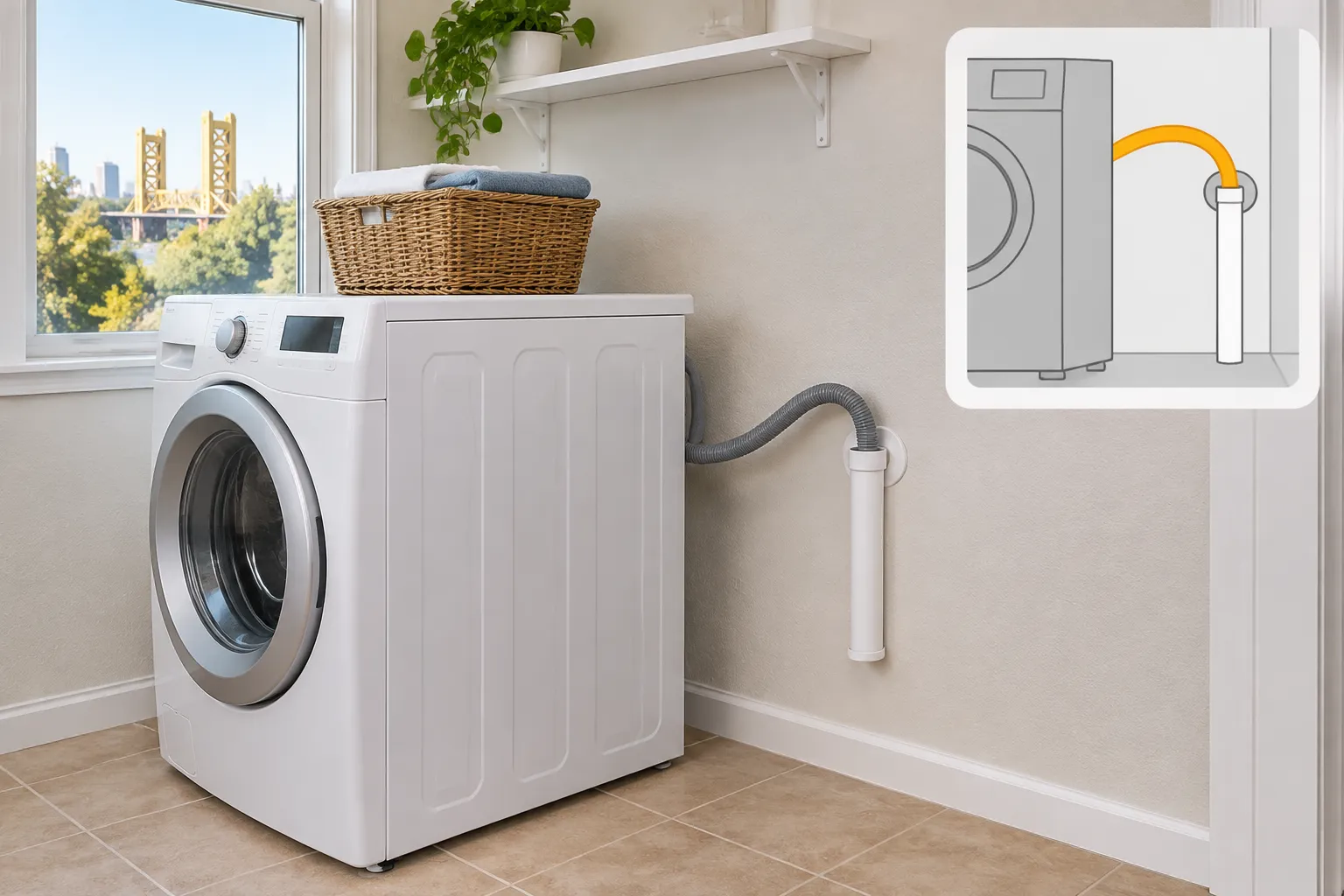
If your washing machine drain is clogged, the signs are water that rises in the standpipe, drains slowly after the pump runs, or a gurgle from the wall. Pull the machine out, check the drain hose for lint, then clear the standpipe and its trap. If water still backs up, the clog is further down the line. The wider picture is in our drain cleaning and clogs guide.
How can you tell the washer drain is clogged, not the machine?
A clogged drain shows up as water rising in the wall pipe during the drain cycle, or standing in the drum after the cycle ends. A failing pump looks different: the machine hums or makes no sound, and the standpipe stays calm. Watch the standpipe during a drain and you can tell which problem you have.
Try this simple test. Start a drain-and-spin cycle and look at the standpipe, the vertical pipe the drain hose sits in. If the water surges up toward the top and drops slowly, the pipe or trap is partly blocked. If the water barely moves and the drum still holds water, the pump, the hose or the filter may be the problem.
Other clues:
- Water spills out of the standpipe onto the floor during the spin.
- The washer takes much longer than usual to empty.
- A sink or tub near the laundry gurgles when the washer drains.
- There is a damp, sour smell near the machine.
If a nearby sink gurgles, or the floor drain in the garage bubbles, the blockage may sit in the line shared with other fixtures, not in the washer's own drain.
What clogs a washing machine drain?
Lint is the main cause. Fibers from towels, fleece and synthetic clothes wash out as short threads, mix with detergent residue and fabric softener, and stick to the inside of the hose and trap. Over time they form a felt-like plug. Pet hair, small items such as socks, and grit also contribute.
Detergent matters. Too much soap leaves a film that catches lint. Liquid fabric softener adds a waxy layer. Using the amount on the label, and running an occasional hot, empty wash with a cleaner made for washers, reduces the buildup.
Check the machine's own filter first. Many front-loaders have a small drain pump filter behind a panel at the bottom front. Place a shallow pan and towels under it, since it releases a surprising amount of water. Unscrew the filter, pull out lint, coins and hair clips, and refit it. Top-loaders usually have a lint screen in the drum or at the hose outlet.
How do you clear the standpipe and drain hose?
Turn off and unplug the machine, pull it out, and lift the drain hose from the standpipe. Look into the standpipe with a flashlight and pull out what you can see. Then feed a plastic drain strip or a small hand auger down the pipe, withdraw it, and flush the line with a bucket of hot water.
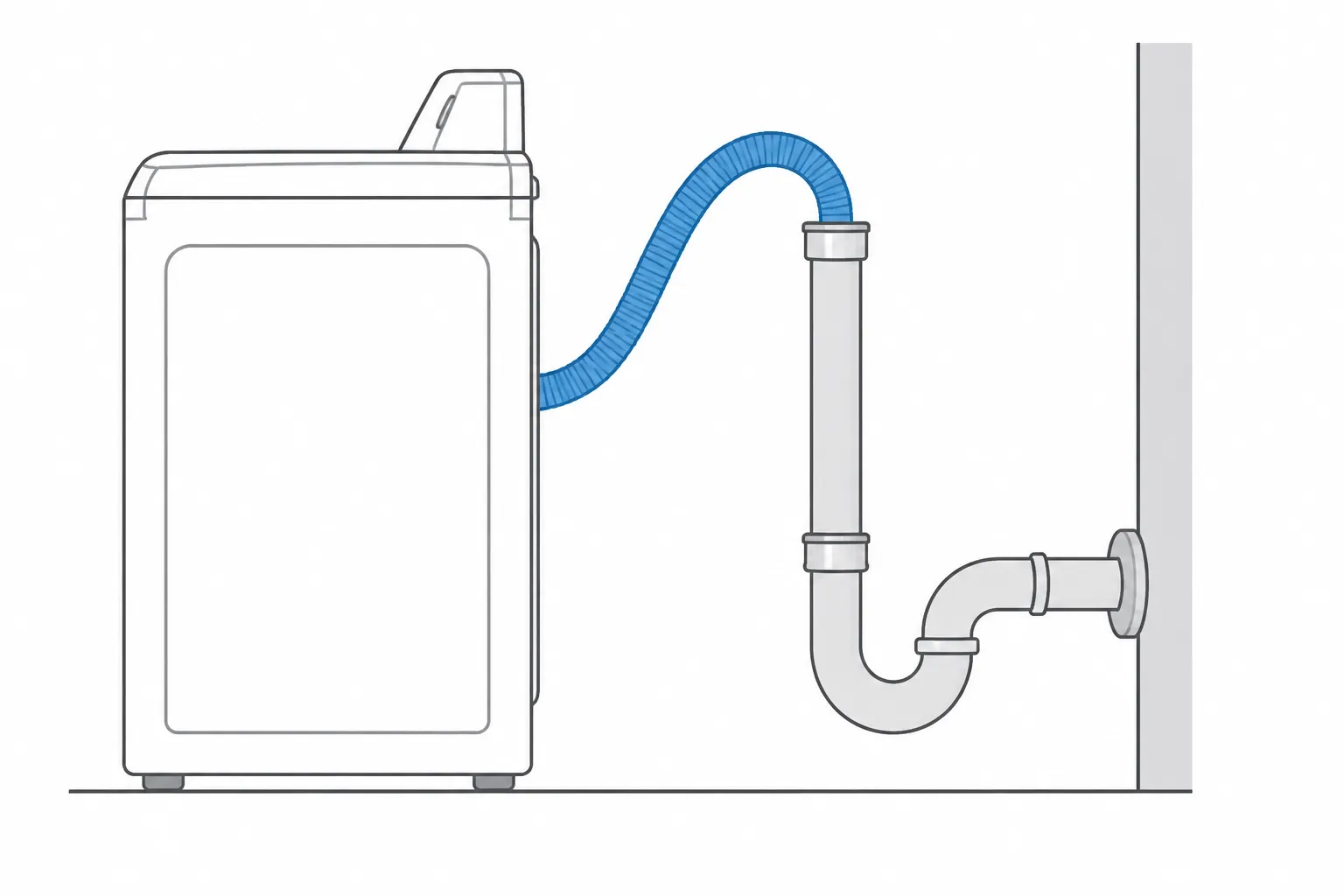
Work in this order.
- Disconnect the hose and run it into a bucket. Shine a light through it, or flush it with a garden hose, to check it is clear.
- Wipe lint from the hose end and the standpipe rim.
- Feed the plastic strip down the standpipe slowly. Twist and withdraw. Expect lint, not hair.
- Pour two to three gallons of hot water in quickly, not a trickle, so it flushes the trap.
- Reconnect the hose, and leave an air gap, so the hose end sits loosely in the standpipe and is not sealed.
- Run an empty drain cycle and watch the standpipe.
The standpipe height matters. The California Plumbing Code puts a washer standpipe at no less than 18 inches and no more than 30 inches above its trap weir, to keep the drain working properly and prevent siphoning. If the standpipe in your laundry is much taller or shorter, or lacks a trap, a plumber can correct it. Ask a plumber to check yours, since local rules can differ.
Avoid chemical drain openers in a washer standpipe. They sit in the trap and can damage rubber hoses, and a clog from lint does not dissolve well in them.
What if the washer drains to a landscape greywater system?
Some California homes send laundry water to the yard through a laundry-to-landscape setup. If yours does, a clog usually sits in the outdoor pipe or at the outlet, not in a household trap. The system has its own rules about detergents and piping, so check the instructions or ask the installer before clearing it with chemicals or a cable.
Greywater from a washer is allowed in California under state rules, and many systems use no pump and a simple valve that sends water to mulch basins. That means the outlet can block with lint and roots, and the valve can jam. A landscaping contractor or plumber who installed it knows how it is built.
If you are unsure whether your washer drains to the sewer or the yard, trace the pipe from the wall. A plumber can also tell you. For the broader issue of the main sewer line, see sewer line repair plumbers.
Use plant-friendly, low-sodium detergent if you have a greywater system. Standard products can harm plants and clog the outlet faster.
When is the washer clog really a sewer line problem?
If water backs up in a floor drain, a tub or a toilet when the washer drains, the blockage is in the shared drain line, not the washer's own trap. Roots, grease and scale in the line outside can cause it. This is a job for a plumber with a cable and a camera, and it should not wait.
In older Sacramento neighborhoods, clay or cast-iron sewer lines with mature trees nearby are a known cause of repeated backups. A washer discharges a lot of water at once, which makes a partly blocked line show itself. The first symptom is often a gurgle or a rising level in the lowest fixture in the house.
What to do while you wait for help:
- Stop using the washer, the dishwasher and any other water-using fixture.
- Do not flush toilets if water is rising in a drain.
- Keep the area dry and protect floors.
- Note which fixtures react when the washer runs.
Read the page on a plumber emergency for how to tell when a backup cannot wait. A plumber can use a cable and a camera to find the cause, and the page on hydro jetting drain cleaning covers the method used on heavy buildup.
What does a plumber charge to clear a washer drain?
Fixr's drain cleaning article (published October 2026) puts snaking at $100 to $300, up to $400 for main sewer lines, with hard-to-access drains adding $75 to $300. Price depends on access, the length of the line and whether the clog is in the washer branch or the shared drain. Sacramento prices vary, and the specialist quotes the real price.
Costs on a typical visit:
| Job | Typical range | What changes it |
|---|---|---|
| Branch line cable run | $100 to $300 | Line length, cleanout access |
| Main line cable run | $100 to $400 | Roots, depth, cleanout location |
| Camera inspection | $100 to $500 (This Old House) | Line length, report |
Ask whether the price includes a camera look and what happens if the clog returns. See how much a plumber costs in Sacramento, or get quotes from local specialists once you know whether the problem is the standpipe or the main line.
Questions people ask
How long does it take to clear a clogged washer drain?
Checking and cleaning the hose, filter and standpipe takes thirty to sixty minutes for most households. A plumber with a cable clears a washer branch line in about an hour. If the problem is in the main sewer line, a camera and a longer cable are needed and the visit runs longer.
What should I ask before I hire someone to clear a washer drain?
Ask whether they will check the standpipe height and trap, how they plan to clear the line, whether a camera is included, and what happens if the washer still backs up afterward. Mention any chemical opener you used. Ask for the quote in writing before work begins.
Do I need to be home for the visit?
Yes, at least at the start. The plumber needs access to the laundry area and often has to move the machine, and you should confirm the price first. Clear space around the washer and shut off the supply valves if you can. Stay for the test run so you can see the drain working.
Can I pour vinegar or baking soda down a washer drain?
A cup of baking soda followed by vinegar can freshen a smelly standpipe, but it will not clear lint. Lint clogs need a physical tool. Hot water in volume does more than either product. Skip commercial openers here, because they sit in the trap and can harm rubber hoses.
The rest of our guides start from plumber in Sacramento.
Sources used
Last changed