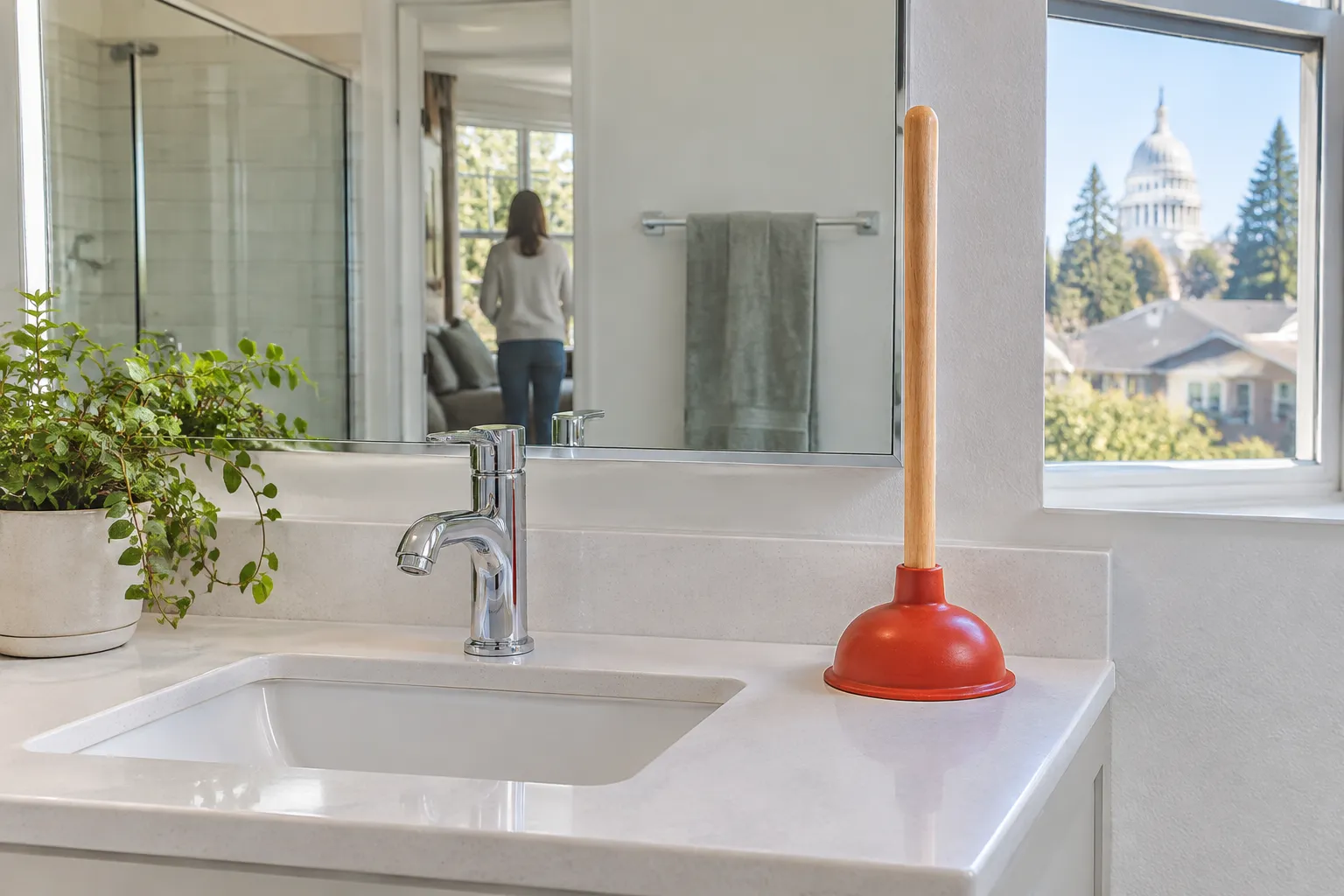
To unclog a bathroom sink, lift out the pop-up stopper and clean the hair and gunk off it, then plunge the bowl with the overflow hole blocked. If water still pools, put a bucket under the trap, unscrew the two slip nuts and rinse the curved pipe. That sequence handles nearly every bathroom sink clog. The wider topic sits in our drain cleaning and clogs guide.
Where does a bathroom sink usually clog?
Most bathroom sinks clog in two places: on the pop-up stopper and in the P-trap, the U-shaped pipe under the bowl. Toothpaste, hair, soap and the odd lost ring collect on the stopper's pivot rod and in the bend. Checking those two spots first, in that order, finds the problem more than nine times in ten.
The stopper is the top suspect, because it sits in the flow and has a thin rod that hair loops around. The trap is second, because its bend holds water and anything heavier than water settles there. Past the trap, the line runs into the wall, and a clog there needs a longer tool.
You can often tell which section is blocked from the way the sink behaves. A sink that drains slowly but steadily points at the stopper or a partial trap clog. A sink that holds water and will not move at all points at a full trap or a wall pipe.
How do you clean the pop-up stopper?
Lift the stopper straight up. Some pull out freely. Others are held by a pivot rod behind the faucet, and you release it by unscrewing a nut on the back of the drain pipe under the sink, then pulling the rod clear. Wipe the stopper clean, rinse it, and look down the drain with a flashlight.
Stopper types vary. A simple press-down plug lifts out with a twist. A lift-rod type has a horizontal rod running into the pipe under the sink. Take a photo of how the rod sits in the stopper's hole before you remove it. The photo saves time when you put it back.
Once the stopper is out, a bent wire or a small plastic strip pulls up the hair mat. Expect a dark, slimy lump. Wear gloves. Rinse the stopper and rod under the tap and run hot water down the open drain for thirty seconds.
If the sink now runs, you are done. Put the stopper back and test that it seals.
Can a plunger clear a bathroom sink?
Yes, if you seal the overflow. Block the small hole near the top of the bowl with a damp rag, fill the sink with two inches of water, seat a small cup plunger over the drain and push and pull with brief strokes for about fifteen seconds. The pressure moves a clog that sits just below the stopper.
A sink plunger is a small flat-bottomed cup, not the flanged type used on toilets. If you have only a toilet plunger, fold the flange inward to flatten it. Use it only with plain water. If you have put a chemical product in the sink, do not plunge, because the liquid can spray back at you.
Pull the plunger away sharply on the last stroke and watch for the water to drop. If it does, run hot water to carry the loosened material through.
How do you take apart a P-trap to clear a sink?
Place a bucket under the trap, then loosen the two slip nuts, one at each end of the U, by hand or with pliers. Slide the trap off, tip out the water and gunk, and clean it with a bottle brush or an old rag. Reattach it and run water to check for drips.
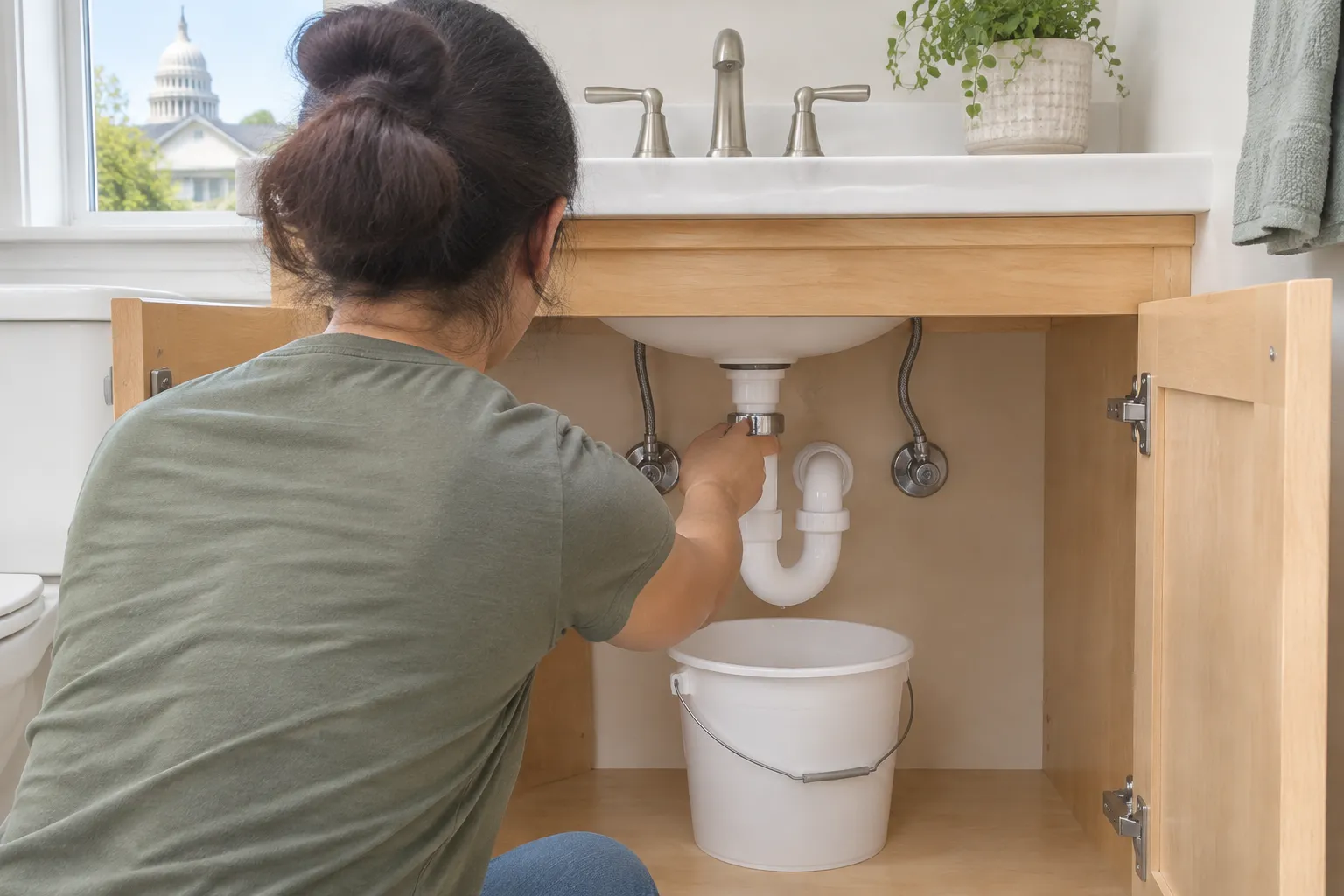
Take care with the washers. Each slip joint has a plastic or rubber washer with a tapered edge, and it must face the right way when you reassemble. The bevel faces the pipe it seals against. If the old washer is flattened or cracked, replace it with the same size. They cost a few dollars at a hardware store.
Do not overtighten plastic nuts. Hand tight plus a quarter turn with pliers is usually enough. A leak that appears after reassembly is nearly always a washer sitting wrong or a nut that has cross-threaded.
If the trap is clean and the sink still holds water, the clog is in the wall pipe. A short hand auger, sometimes called a drum auger, can reach it. Feed the cable into the open pipe in the wall, crank it until it meets resistance, and keep cranking to break up or snag the clog.
What should you not put down a bathroom sink?
Do not pour grease, coffee grounds or cat litter, and avoid leaving strong chemical drain openers as a first step. Bathroom sinks are small. A chemical that does not clear the clog will sit in the bowl, and some products can damage chrome and older metal traps.
Everyday habits matter more than products. Shaving hair, toothpaste, floss and cosmetic wipes all end up in the same bend. A wipe labeled as flushable is not safe in a sink either.
Baking soda followed by vinegar is a harmless light-duty step, though it rarely clears a real plug. An enzyme product used monthly can slow the buildup. For anything blocked now, the hands-on steps above work better than liquids.
When is it time to call a plumber?
Call a plumber when you have cleaned the stopper and the trap and the sink still does not drain, or when more than one fixture is slow. A blockage past the trap may sit in the vent or the wall line. A plumber can clear it with a cable or camera and tell you whether the line itself has a fault.
Fixr's plumber cost guide (updated January 2025) lists $100 to $500 to unclog a drain, and Fixr's drain cleaning article puts snaking at $100 to $300. The price goes up for after-hours work, for a line that needs a camera, and for access problems such as a sink set into a vanity with no room beneath it. Sacramento prices vary. The plumber who sees the job quotes the real figure. To see what the job looks like from start to finish, read how a plumber job runs.
Other reasons to hand it over:
- The trap nuts are corroded and will not turn.
- The pipe under the sink is old galvanized steel that could fail when loosened.
- A sewer smell comes up with the clog, which can mean a dry trap or a vent problem. See plumber for sewer smell.
- The sink and the shower next to it are both slow.
For a wider picture of what a clear-out costs, see how much a plumber costs in Sacramento. If you are ready to compare, you can get quotes from local specialists.
Questions people ask
How long does it take to unclog a bathroom sink?
A stopper and trap clean takes about twenty minutes the first time, less once you know where the parts are. A plumber with a cable usually finishes a bathroom sink in under an hour. It takes longer if the clog sits in the wall pipe, the vent or the main line.
What should I ask before I hire someone to clear a sink?
Ask how they plan to clear it, what the visit fee covers, and whether the price changes if they need a camera. Ask what happens if the first attempt does not work. A written quote with the method named makes comparison easier. You can also ask whether they will clean the stopper and trap as part of the job.
Do I need to be home for the visit?
Yes, at least at the start. The plumber needs access to the bathroom and the cabinet under the sink, and you will want to agree the price before work begins. Clear the vanity of toiletries so there is room to work, and put towels down if the cabinet floor is wooden.
Why does my bathroom sink gurgle?
Gurgling usually means air is being pulled through the trap because the water is draining slowly or the vent is partly blocked. A partial clog is the most common cause. If more than one fixture gurgles, the problem may be in the vent or a shared line, and a plumber should look.
This guide is one of many on Sactown Plumbing Guide plumber.
Sources used
Last changed