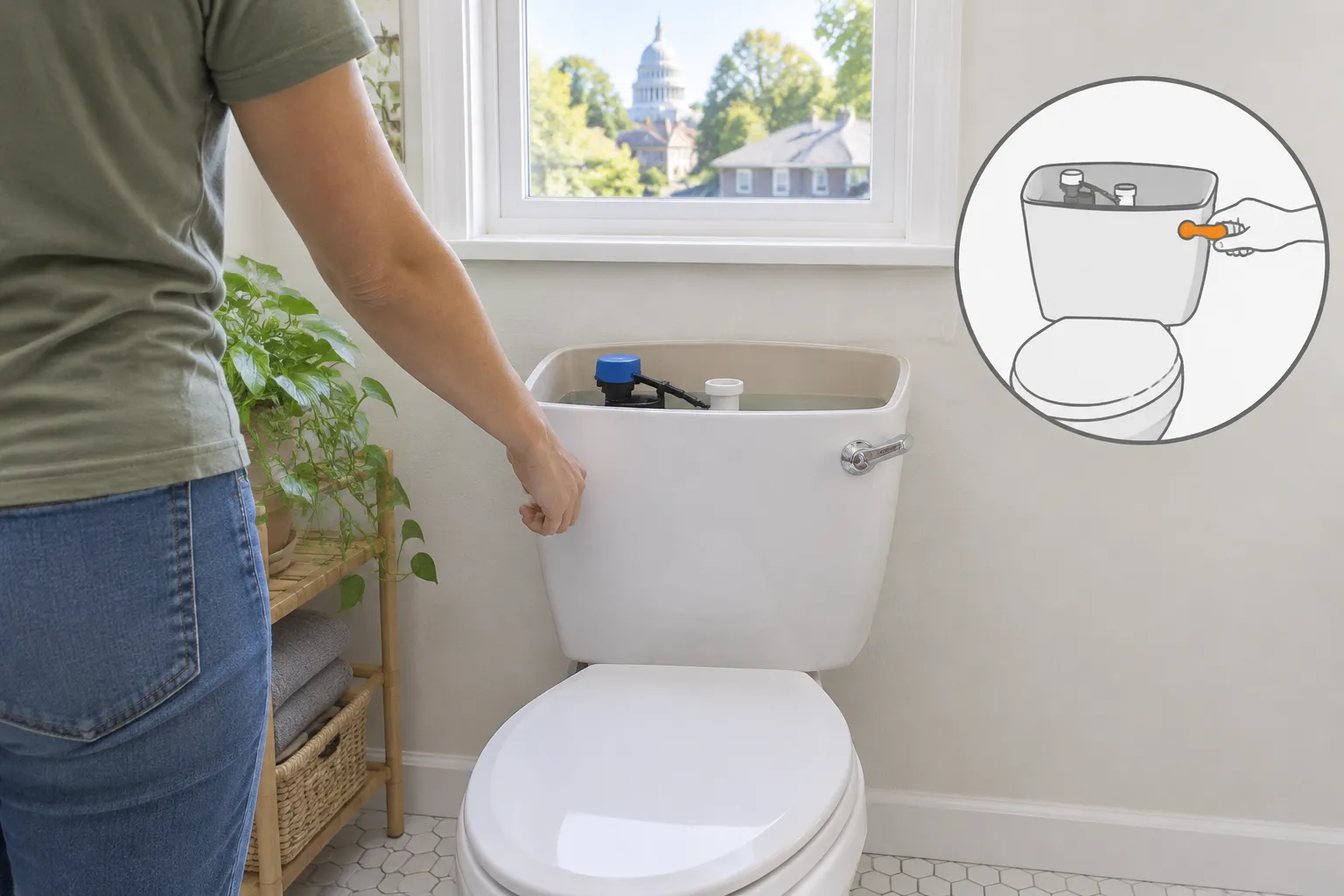
A plumber for toilet repair fixes the parts that make a toilet flush, fill, seal and drain. Most calls are a worn flapper, a failing fill valve, a loose handle or a leak at the base. These are short jobs, often under an hour, and Fixr's toilet repair guide (updated January 2025) says toilet repair costs $60 to $200, with an average of $125. This page covers what a visit includes, what drives the price and when a repair is not worth it.
If your toilet is running, start with how to repair a running toilet. If water is on the floor, read the guide to a plumber for a toilet leak first. When you are ready to compare prices, get quotes from local specialists on the quote page.
Who to call for a broken toilet?
Call a local plumber for anything that leaks onto the floor, any toilet that will not flush after a plunge, and any crack in the bowl or tank. Call a handyman or do it yourself only for simple, visible parts: a handle, a flapper, a seat. Anything that needs the toilet lifted off the floor is plumbing work.
The dividing line is access to the pipes. A handle, a flapper chain or a fill valve sits inside the tank and can be swapped in about 30 minutes with a parts kit. A wax ring, a flange, a shut-off valve or a drain line sits at or behind the wall and floor, where a mistake floods a bathroom or damages a subfloor.
Money also matters. California requires a plumbing contractor with a California license (C-36) for jobs of $1,000 or more in labor and materials, and for any work that needs a permit. Most toilet repairs come in far under that, but a full replacement with floor repair can pass it, so ask the plumber about their contractor license number and check it on the CSLB site before you agree to a larger job.
A quick way to sort your problem:
| What you see | Likely part | Who usually handles it |
|---|---|---|
| Water runs after flushing | Flapper, fill valve or float | You or a plumber |
| Handle is loose or stuck | Handle arm or chain | You or a handyman |
| Weak flush | Rim jets, flush valve or partial clog | Plumber if plunging fails |
| Puddle at the base | Wax ring, closet bolts or supply line | Plumber |
| Cracked porcelain | Bowl or tank | Replace the toilet |
| Rocking on the floor | Loose bolts or flange problem | Plumber |
What does a toilet repair visit include?
A typical visit has four steps: the plumber looks at the symptom, shuts off the supply, swaps or adjusts the failed part and tests several flushes. Most of the time is diagnosis, not parts. Expect the plumber to check the tank, the bowl, the supply line and the floor before quoting the fix.
Common repairs, from simplest to most involved:
- Flapper or chain. The rubber seal that lifts when you flush. It wears out and lets water slip into the bowl. Details are in the guide on toilet bowl keeps running.
- Fill valve and float. The assembly that refills the tank. See how to repair a toilet fill valve.
- Flush handle. A bent arm, a loose nut or a chain that is too long or short. The part is cheap and the fix is a few minutes.
- Supply line and shut-off valve. The braided hose and the small valve on the wall. A dripping supply line is a quick swap. A valve that will not close can mean the plumber shuts the main first.
- Wax ring and flange. The seal between the toilet and the drain. This is the one that needs the toilet lifted. See toilet repair ring flange.
If you also have a blockage rather than a broken part, that is a drain job, covered under a plumber for a clogged toilet.
How much would a plumber cost to fix a toilet?
Fixr's toilet repair guide (updated January 2025) says toilet repair costs $60 to $200, with an average of $125. Simple tank parts sit at the low end. A wax ring or flange job costs more because the toilet has to be lifted and reset. Sacramento prices vary. The plumber quotes the real price.
What moves the price:
- The part. A flapper kit is a small part. Labor is most of the bill.
- Minimum charges. Many plumbers set a minimum visit fee, so a ten-minute flapper swap can cost as much as a 40-minute fill valve swap.
- Access and age. Corroded shut-off valves, seized bolts and an old brittle supply line add time.
- Time of day. After-hours and weekend calls usually cost more.
- Hidden damage. A leak that has soaked the subfloor turns a small repair into a floor repair.
| Repair | Typical range (labor and parts) |
|---|---|
| Flapper or chain replacement | $60 to $120 |
| Fill valve replacement | $60 to $150 |
| Wax ring replacement | $60 to $200 |
| Flange repair, extra | $60 to $200 |
If the quote starts to approach the cost of a new toilet, compare it with the cost to replace a toilet. Repairing is usually worth it when the toilet is under about 15 years old and the porcelain is sound.
How much does it cost to have a toilet installed?
Fixr's toilet repair guide lists $400 to $800 for a full toilet replacement, with a $25 to $100 removal fee. The price rises if the old one is hard to remove or the flange needs work. Home improvement stores often sell installation as a service, but the work is usually done by an outside contractor, so ask who does it and what is included before you pay.
The base price normally covers removing the old toilet, setting the new one on a fresh wax ring and checking for leaks. It often leaves out a new supply line, a new shut-off valve, flange repair, floor repair and hauling away the old unit. Ask for those as line items in the quote.
Choosing a toilet matters too. EPA WaterSense labels toilets that use 1.28 gallons per flush or less, which is about 20 percent less than the 1.6-gallon federal standard. Older toilets can use as much as 6 gallons per flush, so an old unit that keeps needing repairs may be cheaper to replace than to keep fixing.
How many gallons a month does a leaky toilet use?
A leaking toilet can waste thousands of gallons a year. EPA says the average household's leaks waste more than 9,300 gallons of water each year, and a worn flapper can leak silently for months. A steady trickle of even a few gallons a day adds up to a hundred gallons or more a month.
The worst leaks are the silent ones. A toilet that visibly runs gets fixed. A flapper that lets a thin stream into the bowl makes almost no noise. You can find it with a dye test: put a few drops of food coloring in the tank, wait 10 minutes without flushing, and if color shows in the bowl you have a leak. Flush right after so the tank does not stain.
A silent leak is easy to miss in a monthly water bill, especially when summer outdoor watering already pushes your total up. Check your water meter before and after an hour when nobody uses water. If the dial moves, something is leaking.
When is DIY a good idea, and when is it not?
DIY works for parts that sit inside the tank and for a seat or handle. It stops at the floor. If you need to lift the toilet, cut a pipe or open a wall, hire a local plumber. A flapper, a handle and a fill valve are all realistic weekend jobs with a repair kit and an adjustable wrench.
Basic steps for any tank repair:
- Close the small shut-off valve at the wall by turning it clockwise.
- Flush to empty the tank and sponge out the rest.
- Swap the failed part, matching the brand and model printed in the tank if you can.
- Open the valve slowly, let the tank fill and flush three times while you watch for drips.
Stop and call a plumber if the shut-off valve will not close, if the supply line is corroded, if the bolts spin without tightening, or if water appears around the base after you finish. A toilet that rocks needs more than a quick fix, because rocking breaks the wax seal again.
Brands do not change the basics. Kohler, American Standard, Toto and others use the same pattern of flapper, fill valve and wax ring, though parts are not always interchangeable. The model number is stamped on the inside of the tank or under the lid.
Does a leaking toilet cause damage?
Yes, but slowly. A small leak at the base soaks the subfloor, grows mold and can rot the wood around the flange. This is the main reason to act on a puddle early. Water on the floor is also a sign the seal has failed, not a normal bit of condensation.
In humid weather a cold tank can sweat and drip onto the floor. That is condensation, not a leak, and it does not need a plumber. Tell the two apart by drying the tank and floor, then watching: sweat appears on the outside of the tank evenly, while a leak shows at one point such as the bolts, the supply line or the base.
Questions people ask
What is the most common cause of a leaking toilet?
A worn flapper is the most common cause of water leaking inside the toilet, from tank to bowl. For water on the floor, the most common cause is a failed wax ring or loose closet bolts at the base. The first costs a few dollars. The second needs the toilet lifted off the floor.
What is the average cost for a plumber to fix a toilet?
The average is $125 in Fixr's toilet repair guide, with a full range of $60 to $200. Tank parts are the cheapest. Wax ring and flange work sit higher. The plumber quotes the real price after seeing the toilet, and minimum visit fees often set the floor.
How much does a plumber charge for fixing a toilet?
Most charge either a flat price per repair or an hourly rate with a minimum. Many toilet jobs take 30 to 60 minutes. Ask whether the quote includes parts, the visit fee and any cleanup, and whether the price changes if they find a corroded valve or flange once the toilet is open.
Can a plumber fix a broken toilet?
Usually yes. Tank parts, handles, seals, supply lines and wax rings are all routine. The exception is cracked porcelain in the bowl or tank, which cannot be repaired reliably. In that case the plumber will recommend replacing the toilet, and you can compare that quote against a repair.
How to fix toilet plumbing problems?
Start by naming the symptom: running, weak flush, slow fill, or leaking. Running and slow fill are tank problems you can often fix yourself. A weak flush may be a partial clog. A leak at the base needs a plumber. Shut off the supply valve first in every case.
Read on
- Fix a running toilet
How do you repair a running toilet: a step-by-step fix in the order that saves time, the parts it costs, and the point where a local…
- Toilet replacement cost
What a plumber charges to replace or install a toilet in Sacramento, plus wax ring, handle and fill valve costs, and what changes the price.
- Leaking toilet
Plumber for a toilet leak: how to find where the water comes from, what a leak at the base means, typical repair costs and when to call a…
- Toilet fill valve repair
Repair a toilet fill valve: when to adjust and when to replace it, the steps in order, the parts it costs and what a Sacramento plumber…
- Toilet keeps running
Toilet bowl keeps running: read the sound and the water level to find the cause, see what a fix costs in Sacramento, and learn when to…
- Toilet flange repair
Toilet repair ring flange: signs your wax ring or closet flange has failed, what the repair involves, typical costs and when to call a…
More services are listed on plumber in Sacramento.
Sources used
Last changed