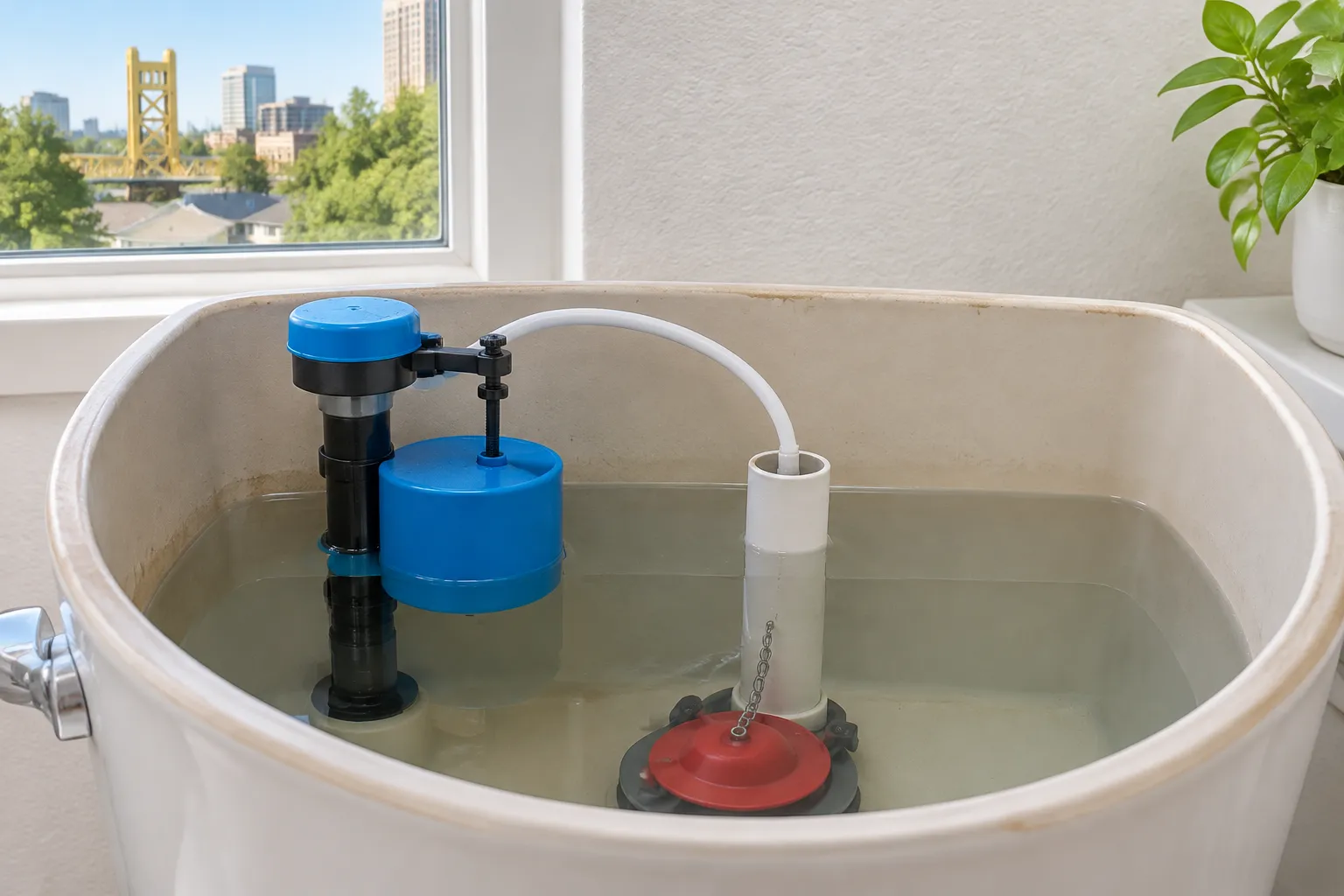
To repair a toilet fill valve, first try cleaning it and adjusting the float. If the valve still hisses, leaks or will not shut off, replace it: close the wall valve, drain the tank, unscrew the old valve from the bottom of the tank, fit the new one at the same height and reconnect the supply. Fixr's toilet repair guide lists $60 to $150 for a plumber to replace a fill valve.
This guide covers the fill valve only. The full set of tank fixes, with prices, is in the toilet repair guide. If you are not sure the fill valve is your problem, work through the symptoms in why a toilet bowl keeps running.
What does a fill valve do, and how do you know it has failed?
The fill valve, also called the inlet valve or, on older toilets, the ballcock, lets water into the tank after a flush and stops it when the float reaches the set height. It has failed if the tank never stops filling, fills slowly, hisses, or leaks from the base of the tank where the supply line connects.
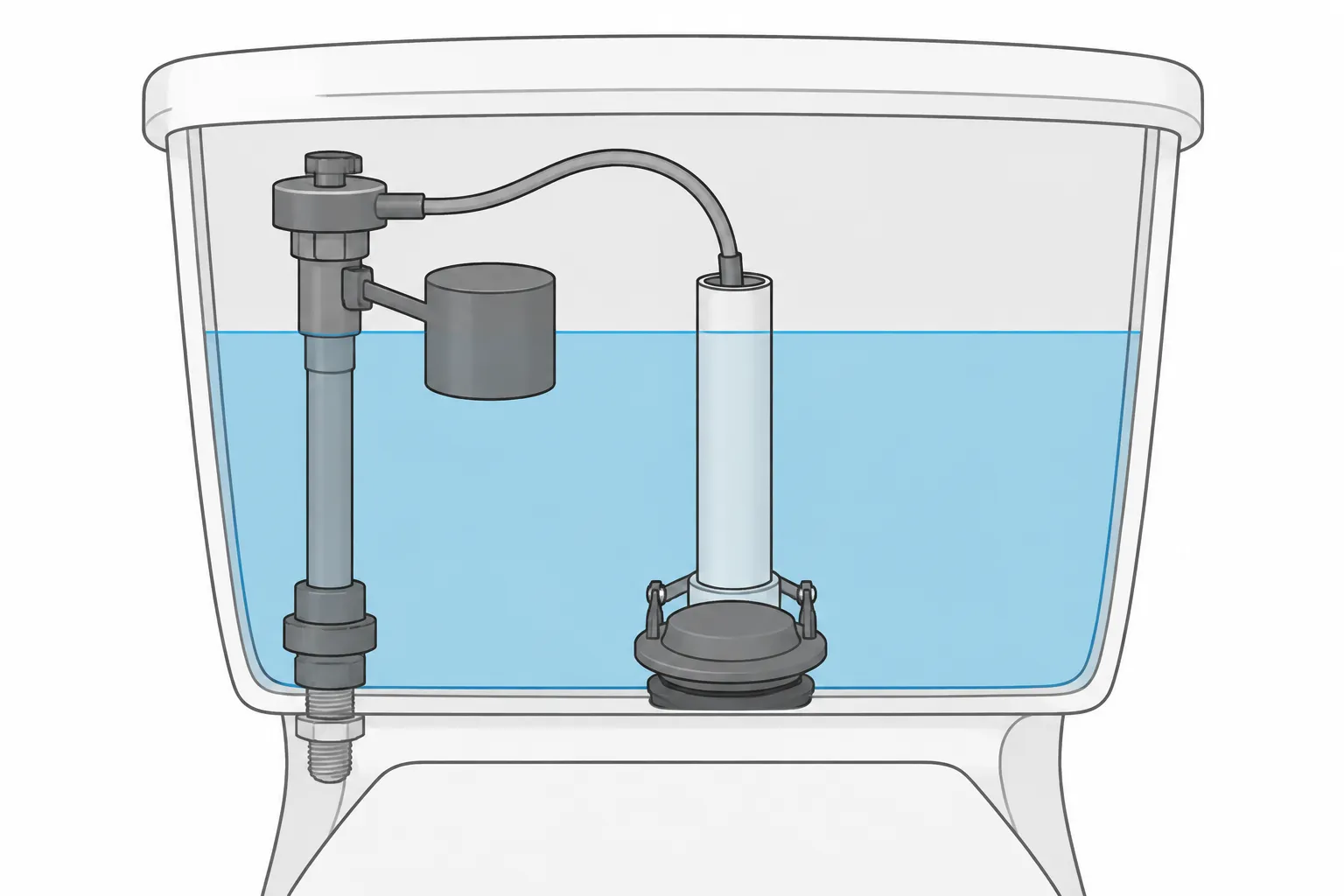
Signs, from most to least common:
- Constant hissing after the tank is full.
- Water running into the overflow tube and down the drain.
- Slow refilling that takes minutes after each flush.
- A tank that fills too low, which gives a weak flush.
- Noise at refill, such as whistling or knocking.
- Dripping from the underside of the tank at the fill valve nut.
To confirm, hold the float up by hand. If the water stops, the fill valve is not shutting itself off. If it keeps flowing even with the float held up, the valve's inner seal has failed, and replacement is the fix.
Fill valves come in several styles: the cup-type that slides up and down the shaft, the older float-ball on an arm, the diaphragm type and the canister type. The part and the repair steps are almost the same for all of them. Cup types are the most common today and the easiest to adjust.
Can you repair the fill valve instead of replacing it?
Sometimes. A valve that is only dirty or out of adjustment can be fixed in 15 minutes. Remove the cap, flush out debris, and reset the float. Valves with a replaceable seal can be rebuilt with a small kit. For most modern plastic valves, replacing the whole unit costs about the same as a rebuild kit and lasts longer.
Try these in order:
- Flush out grit. Close the wall valve, remove the cap by turning it counterclockwise a quarter turn, hold a cup over the valve and open the wall valve briefly. Water carries away grit under the seal.
- Adjust the float. Turn the adjustment screw or slide the clip until the water stops about an inch below the top of the overflow tube, or at the mark on your valve. Follow the valve's own marking.
- Check the refill tube. The small tube from the valve should clip to the overflow tube and end above the water, not below. A tube dipping into the water can siphon water back.
- Replace the seal or the valve. If the seal is cracked or the valve still leaks after cleaning, swap it.
If you are replacing it, you are also close to the flapper. Replacing both at the same time is common, because both rubber and plastic parts age together. A flapper gasket, which seals the flapper to the flush valve, can be replaced the same way: see the section below.
How do you replace a toilet fill valve step by step?
You need a new fill valve kit, an adjustable wrench, a sponge, a small bucket and a towel. Close the wall valve, flush to drain the tank and sponge out the rest. Unscrew the supply line from the fill valve, remove the locknut under the tank, lift out the old valve, and fit the new one at the height shown in its instructions.
Full steps:
- Turn the wall valve clockwise to stop the water.
- Flush, hold the handle down and sponge out the remaining water.
- Disconnect the supply line from the bottom of the valve. Water remains in the line, so keep a cup ready.
- Unscrew the large locknut under the tank and lift out the valve.
- Set the new valve in the hole. Adjust the height by twisting the shaft so the top of the valve sits at least an inch above the overflow tube, or as the instructions say.
- Tighten the locknut by hand plus a quarter turn with a wrench. Plastic cracks easily, so stop at snug.
- Reconnect the supply line, and clip the refill tube onto the overflow tube.
- Open the wall valve slowly, check for drips and let the tank fill. Adjust the float until water stops at the line.
- Flush three times, and look under the tank for leaks after each.
If the supply line looks old, crusty or kinked, replace it in the same visit. A braided stainless line costs a few dollars. If the shut-off valve will not close fully, the water will keep flowing while you work. Stop there and call a plumber, since forcing it can break the valve.
What about the toilet flapper gasket?
A flapper gasket is the seal between the flapper and the flush valve seat, and on some toilets a rubber gasket also seals the flush valve to the tank. A gasket that has hardened leaks water from tank to bowl. Replace the flapper if it is the worn part. A tank-to-bowl gasket is a separate job.
Many people ask about flapper gasket replacement while doing the fill valve. The two jobs are close but not the same:
- Flapper and its seat. Replace the flapper, clean the seat and test with food coloring. This is a 10-minute job.
- Flush valve gasket. This seals the large nut under the tank where it meets the bowl. It means unbolting the tank, which is a bigger job than the fill valve.
If you see water at the join between the tank and bowl, or on the floor under the tank, do not assume the fill valve is at fault. Read about a leak in the guide to a plumber for a toilet leak.
How much does it cost to repair a toilet fill valve?
Fixr's toilet repair guide (updated January 2025) lists $60 to $150 to replace a fill valve. Labor is the largest part of the bill, and many plumbers apply a minimum visit fee. Sacramento prices vary, and the plumber quotes the real price.
| Option | Typical cost |
|---|---|
| Fill valve kit, DIY | Cheap at a hardware store |
| Plumber, valve swap only | $60 to $150 |
To get the best value, ask for both the fill valve and flapper to be replaced in one visit if the toilet is more than ten years old. Single visits cost less than two.
If a plumber quotes close to the cost of a new toilet, compare with the price of replacing a toilet. Most toilets that need only a fill valve are not near that point.
Efficient toilets also change the sums. WaterSense models use 1.28 gallons per flush or less, and older ones can use up to 6 gallons. A leaking fill valve keeps wasting water after the repair is delayed, and EPA says household leaks can reach 180 gallons per week.
When to call a plumber business
Call a plumber if the shut-off valve will not close, the tank bolts are rusted, the supply line is corroded or the tank is cracked. Also call if the toilet still runs after a new fill valve and flapper, since the flush valve or tank may be the real fault.
To get prices, use the quote page to ask local specialists. Give them the toilet's brand if you can find it inside the tank. For a different symptom, the running toilet repair walk-through covers the flapper and chain steps. You can also explore more plumbing answers from the home page.
Questions people ask
How long does repairing a toilet fill valve take?
Cleaning and adjusting takes 10 to 15 minutes. A full replacement takes 30 to 60 minutes for most people the first time. A plumber usually finishes within an hour, longer if the shut-off valve or supply line must be replaced too.
What should I ask before I hire someone to repair a toilet fill valve?
Ask what the price covers, whether the valve and supply line are included, whether there is a visit fee, and whether they will check the flapper and water level while they are there. Ask how they confirm there are no leaks afterward.
Do I need to be home for a fill valve repair?
Usually yes. The plumber needs to reach the bathroom and the wall valve, and you should see the toilet fill and shut off at the right level before they leave.
How do I stop my toilet fill valve from hissing?
First clean the valve by flushing grit out. Then adjust the float so water stops below the overflow tube. If it still hisses with the tank full, the inner seal has worn and the valve needs replacing, which is an inexpensive part.
Sources used
Last changed