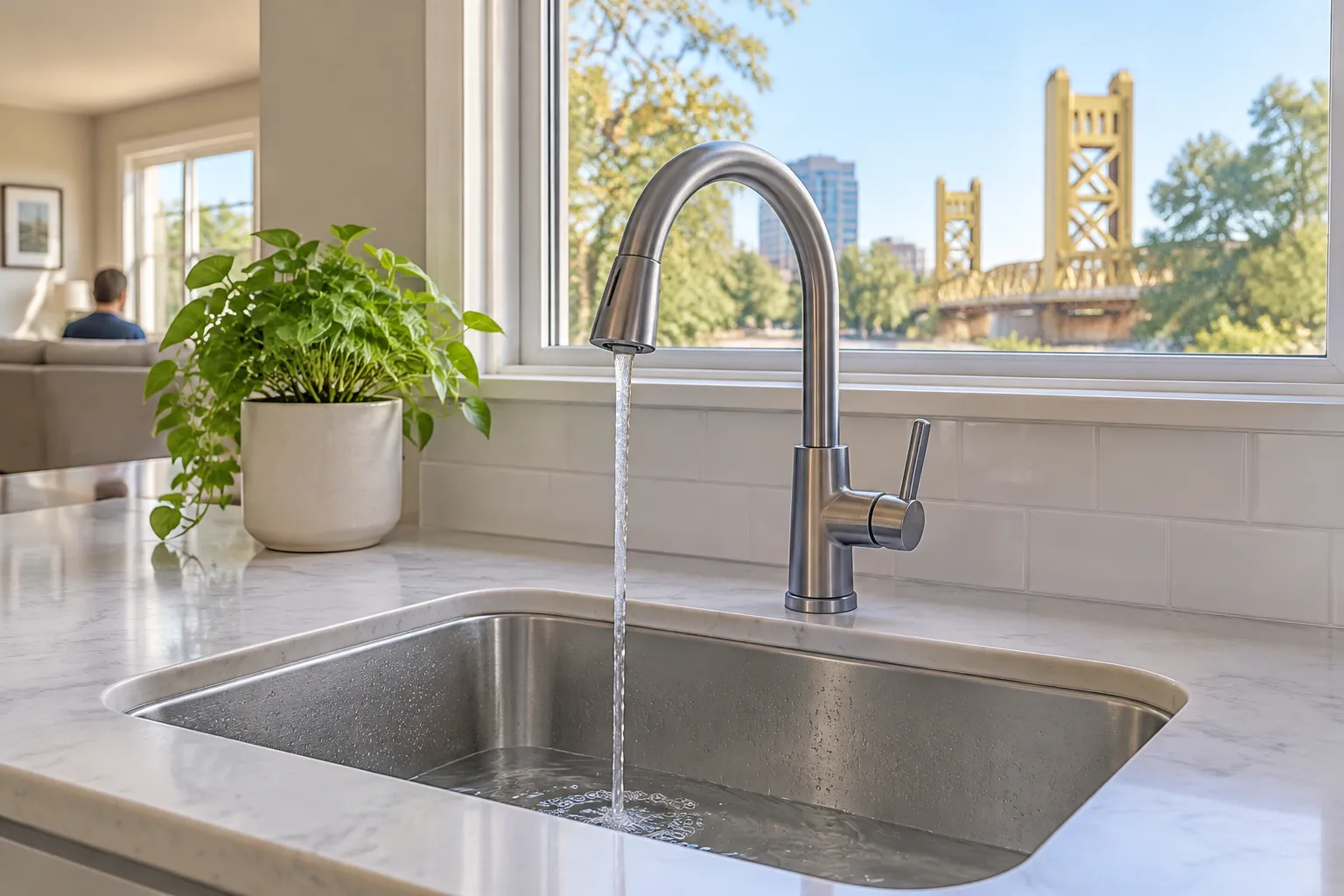
Low water pressure in a whole house usually comes from a partly closed shutoff valve, a failing pressure regulator, corroded galvanized pipe, a hidden leak or a problem on the supply side. A plumber measures water pressure with a gauge first, then works backward from the street to the fixtures. Repairs depend on the cause, and Fixr's plumber cost guide lists $150 to $800 to replace a valve. If only one shower or one faucet is weak, that is a different problem, covered in our guide to low shower pressure.
What does a plumber do for low water pressure in the house?
A plumber attaches a pressure gauge to an outdoor hose bib or the water heater drain and reads the pressure with everything off. That number decides the path. A low reading points to the main shutoff, the regulator, the supply pipe or the utility side. A normal reading points to blocked fixtures, a single run of pipe or a hot-water-only fault.
Typical steps in a visit:
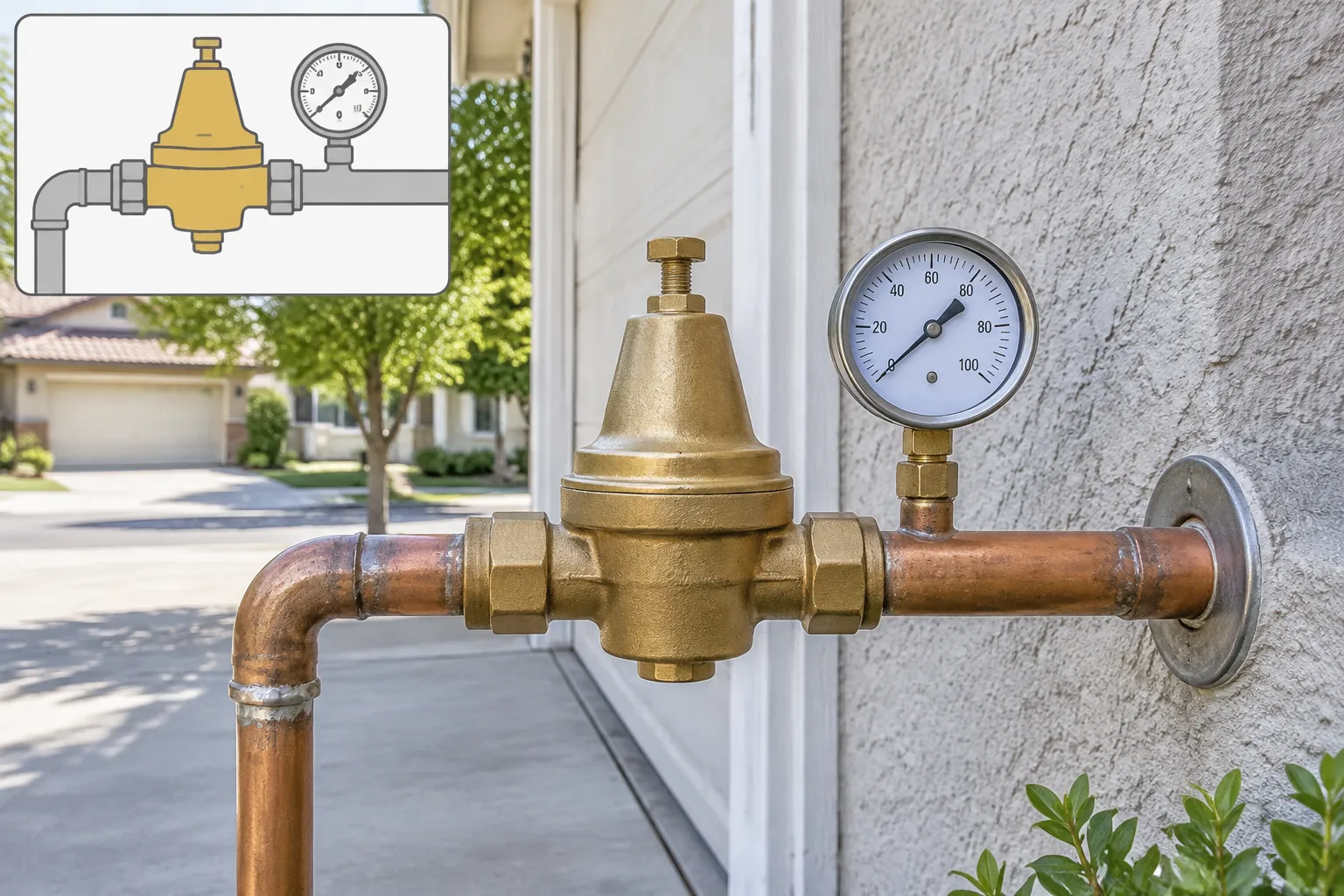
- Gauge test. Many homes sit between roughly 40 and 80 psi. Under about 40 psi, you notice. Above 80 psi, California's plumbing code calls for a pressure regulator that brings the pressure down.
- Check the main valve and the meter valve. A gate valve that was never fully reopened after past work is a common culprit. The plumber also checks the valve at the meter.
- Test the regulator. The pressure reducing valve, if your home has one, is usually a bell-shaped brass fitting near where the supply enters. Springs and diaphragms wear out, and a failing one can drop pressure or spike it.
- Compare hot and cold. Weak hot water only means the water heater, its valves or its pipes. Weak everywhere means the supply.
- Look for leaks. A leak between the meter and the house drains pressure before it reaches your taps. A quick meter test, with all fixtures off, shows whether the dial is still moving.
- Check the pipe material. Older homes with galvanized steel can clog from the inside with scale. That reduces the diameter slowly over decades.
What causes low water pressure in a home?
The most common causes are a valve that is not fully open, a worn pressure regulator, scaled pipes, a supply leak and clogged fixture screens. Occasionally the street-side supply is the issue, such as a main repair or a heavy-demand period. Each has a different fix and price.
| Cause | Where it shows up | What usually fixes it |
|---|---|---|
| Main or meter valve partly closed | Whole house, sudden or after other work | Open the valve fully, or replace a failing gate valve |
| Pressure regulator failing | Whole house, may swing high and low | Replace the regulator |
| Galvanized pipe corroded inside | Whole house, gets worse slowly | Repipe, see repiping a house |
| Leak in the supply line | Whole house, sometimes a wet patch or high bill | Locate and repair the line |
| Water heater valve or sediment | Hot side only | Service or replace the heater |
| Clogged aerators or cartridges | One faucet | Clean or replace the part |
| Utility-side issue | Several neighbors affected | Report to the water utility |
If the pressure dropped suddenly overnight, check whether the utility is working on the street, whether anyone shut a valve for a repair, and whether the water meter dial is turning with all fixtures off.
Is it the city supply or my house?
If your neighbors have the same problem, call the water utility. Sacramento's utility sets how water arrives at the meter, and a fault upstream is its job. If your neighbors are fine, the problem is on your side of the meter. A gauge test at the outdoor spigot separates the two quickly and costs little.
What affects the price of fixing low water pressure?
Fixing low water pressure depends on the cause. Fixr's plumber cost guide (updated January 2025) lists $150 to $800 to replace a valve and a service call fee of $50 to $300. Replacing a pressure regulator or any pipe replacement, repiping or supply line leak is quoted separately. Sacramento prices vary, so let the specialist quote.
What moves the price:
- Whether it is a diagnosis or a repair. Many plumbers charge a flat call-out that covers the test.
- Access. A regulator in a crawlspace, or a main line under a slab, takes more time and sometimes digging.
- Parts and size. A regulator for a three-quarter inch line costs more than a faucet cartridge.
- Permit and inspection. Larger work such as replacing a supply line can need a permit from the City or County building department. Ask the plumber who pulls it.
- Scope. If the answer is a repipe, the price becomes a whole-house project. See repipe house cost for the ranges.
For hourly and call-out rates in general, the plumber cost page lists typical figures. If leaks are the suspect, leak detection pricing shows what finding a hidden leak costs.
Signs you need a plumber for low water pressure
You need a plumber when the pressure is weak at every tap, drops suddenly, swings up and down, comes with a high water bill, or is weak only on the hot side. A banging pipe when you shut a tap off, or a hissing at the regulator, also deserves a visit.
Quick self-checks before you book:
- Is it one fixture? Unscrew the aerator on the faucet and look for grit or white scale. If that restores the flow, you do not need a plumber.
- Is it hot or cold? Compare. If cold is strong and hot is weak, the problem is the water heater or the hot water pipe.
- Is the main valve fully open? The main valve is usually at the house side of the meter or where the line enters the home. Turn it fully counterclockwise if it is a wheel handle. A lever handle should run parallel with the pipe when open.
- Is the meter moving? With every tap off, a spinning dial means a leak.
- Are there wet spots? Look for soft ground, a damp slab or an unexplained green patch near the supply line.
Well water is a separate case. Most Sacramento homes are on a municipal supply, but some rural properties rely on a private well and pump, where low pressure often traces to a failing pressure tank or pump switch. A well pump specialist handles that, and the checks differ from the ones above.
Can a plumber fix sudden low water pressure?
Yes. A sudden drop is often easier to find than a slow one, because something changed. Common causes are a valve moved during other work, a regulator that failed, a supply leak or a utility event. A plumber's gauge test and meter check usually separate those within the first hour.
If the pressure fell right after a repair, tell the plumber what was done and when. If it came back after a shutoff, air or debris may be trapped in the lines. Opening the lowest faucet and then the highest one, each for a minute with the aerators removed, sometimes clears a blocked screen. A sprinkler or irrigation line that fails can also drain pressure, so mention it if you have one running off the house supply.
Questions people ask
How long does a plumber for low water pressure take?
A diagnosis with a gauge and meter check usually takes 30 to 60 minutes. A valve fix or regulator swap adds another hour or two. A leak search, a supply line repair or a repipe takes longer and is quoted per job. The plumber should give you a window once they have measured the pressure.
What should I ask before I hire someone for low water pressure?
Ask whether the price includes the pressure test. Ask what happens if the problem is on the utility side, and whether a regulator comes with a part warranty. Ask for the price in writing and whether any permit is needed. Check that the business holds a California contractor license for plumbing.
Do I need to be home for a plumber for low water pressure?
Usually yes. The plumber needs access to the main valve, the water heater and fixtures, and you should approve any repair price before they start. If you cannot be there, agree access and the price in writing beforehand.
What is a normal water pressure for a house?
Most homes are comfortable between roughly 40 and 60 psi. Pressure above 80 psi is more than the California Plumbing Code allows without a regulator, and it wears out fixtures and appliances faster. A cheap gauge on an outdoor hose bib shows your number.
Can low water pressure damage anything?
Low pressure itself rarely does damage, though weak flow can cause some appliances to run poorly or fail to fill. The causes can matter: a supply leak wastes water and can undermine soil, and failing regulators can spike pressure and strain pipes. It is worth checking soon.
Do sprinklers work with low water pressure?
Not well. Sprinkler heads need enough pressure to spread and pop up, so low supply pressure gives weak coverage. Check the valve and regulator first. If the house supply is fine and the sprinklers still struggle, a sprinkler specialist can look at zone sizing and head counts.
Every service and price guide is on plumber sacramento.
Sources used
Last changed