If your shower water pressure is low but the sinks run normally, start with the showerhead. Mineral scale, a clogged screen or a flow restrictor is the cause in most cases, and unscrewing the head shows you within a minute. If the stream is still weak with the head off, the fault is behind the wall: a worn shower valve cartridge, a partly closed stop valve or a kinked supply line. A repair is covered by our page on faucet, sink and shower repair. If every tap in the house is weak, see low water pressure in the whole house instead.
Why is my shower pressure low when the sink is fine?
Because the shower is a separate branch with its own showerhead, valve and pipe run. The sink being strong tells you the main supply is healthy. The weak point is in the parts only the shower uses: the head, the arm, the valve cartridge, or the pipes behind the wall.
Work from the outside in, because the cheap checks come first:
- The showerhead. Scale builds up in the small nozzles and the inlet screen. Sacramento water leaves mineral deposits, so this is common.
- The flow restrictor. Most heads contain a small plastic disc that limits flow. It is meant to be there.
- The shower arm and hose. A kinked hand-shower hose or a blocked arm cuts flow.
- The valve cartridge or mixing valve. The part behind the handle that mixes hot and cold. Worn or gritty cartridges restrict flow.
- The stop valves. Some showers have small isolation valves on the supply lines behind an access panel. If one is part closed, flow drops.
- The pipe. Corroded or narrowed supply pipe inside the wall reduces flow to that one fixture.
A clue: if the shower is weak on hot only, or cold only, the cartridge or one of the supply lines is the likely suspect. If the shower is weak and also surges or bangs, you may be seeing water hammer, where a sudden stop in flow sends a pressure shock through the pipes.
How do you clean or replace a showerhead to restore pressure?
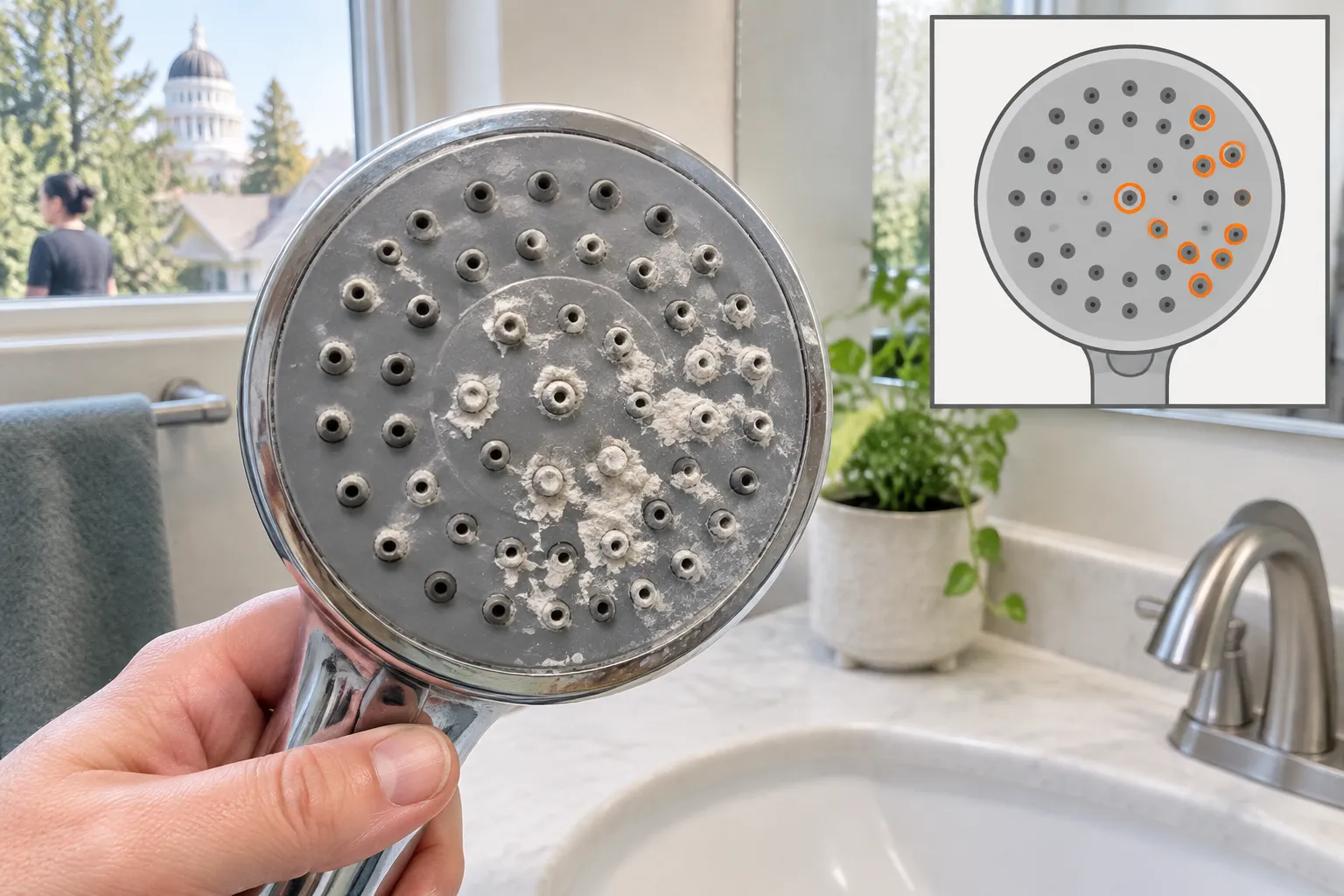
Unscrew the head by hand or with a wrench wrapped in a cloth, then soak it in white vinegar for about an hour. Scrub the nozzles with a soft brush or a toothpick. Rinse the inlet screen. Reattach with new plumber's tape on the threads. If the stream is still thin, the head may need replacing.
Steps:
- Turn off the water at the shower valve if it has stops. Otherwise the water is off already when you remove the head.
- Remove the head. Clean the inlet screen at the arm. Run the shower with the head off for a few seconds to flush grit. If the flow is strong, the head is your problem.
- Soak and scrub the head. Use vinegar for scale. If the head has rubber nozzles, rub them with your thumb to break the scale.
- Replace the plumber's tape on the arm threads, hand tighten, then a quarter turn with a wrench over a cloth.
Should you remove the flow restrictor?
It is better not to. California limits showerhead flow. The state's plumbing code sets a maximum of 1.8 gallons per minute at 80 psi, lower than the 2.5 gpm federal limit, and heads sold in the state are made to meet it. Removing the restrictor can put you outside the limit and spike your water and gas or electric bills. A better fix is a head designed to feel strong at low flow, with a wider spray pattern and aeration.
If you want a stronger feel without more water, look for a showerhead that is labeled for the 1.8 gpm limit and uses air-injection or pulsing patterns. Pressure on the skin depends on the nozzle design as much as on volume.
What if the shower valve or cartridge is the problem?
A worn cartridge, a blocked valve or a faulty mixing valve is behind most strong-in-the-sink, weak-in-the-shower cases when the head is clean. Symptoms are weak flow even with the head off, a handle that is stiff or loose, temperature swings or a drip from the spout. Replacement is a repair job for a plumber unless you are comfortable with it.
Where the problem sits:
- Single-handle valve. The cartridge sits behind the handle. A plumber removes the handle and trim, pulls the cartridge and cleans or replaces it. Brands and sizes vary, so the plumber identifies the valve first.
- Two-handle valve. Each handle has its own stem. A worn stem can restrict flow on one side.
- Pressure balancing valve. Many newer showers have these to prevent scalds. Grit in the small ports reduces flow.
- Access. Some homes have an access panel behind the shower, in a closet or hall, which makes the repair cheaper. Others need the tile opened.
A valve swap that stays within the same opening costs less than one that needs tile work. Fixr's plumber cost guide (updated January 2025) lists $100 to $600 for shower repair. Sacramento prices vary, and the plumber you hire quotes the real number. For wider rates see the plumber cost page.
Is low hot-water pressure in the shower a water heater issue?
It can be. If cold water is strong and hot water is weak, check the water heater: a partly closed valve, sediment in the tank or a blocked outlet can restrict hot flow. If the hot water runs out fast or is lukewarm, that is a different symptom. See no hot water for those causes, or water heater repair for what a plumber looks at.
Hard water scale also builds up inside tank outlets and pipes over years. If scale keeps coming back, a softener or other treatment can help, and water softener installation explains what that involves.
What about mobile and manufactured homes?
Mobile and manufactured homes are built differently, and the same low-pressure checks apply with a few extras. Fixtures are often smaller, the supply lines are often flexible PEX and the layout is compact, so a crimped line or a partly closed valve under the home can cut pressure. Diagrams vary by manufacturer and year, so ask a plumber to trace your own layout.
Common features and what to look for:
- Kitchen and bathroom sinks. Supply lines run from the floor or wall, and shutoff valves sit under each fixture. A partly closed angle stop restricts flow to that sink.
- Shower and tub. The valve is often in a plastic or fiberglass surround. A small access panel on the back wall of the unit, in the closet or the hall, is common.
- Underneath. Lines run beneath the floor in the crawl area. A pinched or sagging flexible line is a frequent cause of a weak fixture.
- Fixtures. Plastic trims and lighter-gauge fittings are common. Use the parts listed for your fixture, and ask a plumber when the connection size is unclear.
Which diagram applies to your home depends on the make and year, which is usually printed on a data plate inside the home. A plumber who works on manufactured homes can read it and trace the lines. A mobile home owner should also check lender or park rules on who may open the floor.
When should you call a plumber for low shower pressure?
Call a plumber if cleaning the head does not help, the flow is weak with the head off, the handle is stiff or drips, you see water stains or soft tile around the shower, or the problem is on one side only. If water is dripping inside a wall or through the ceiling below, call the same day.
Before you call, note whether it is hot, cold or both, whether the sink nearby is normal, and when it started. That shortens the visit. The plumber you hire may need a permit for larger work, such as moving a valve or opening a wall. California requires a contractor license for work of $1,000 or more in labor and materials, and the plumber should quote in writing before they start.
Questions people ask
How long does it take to fix low shower pressure?
Cleaning a showerhead takes about an hour including soaking. A plumber replacing a cartridge usually needs one to two hours. Work that opens a tile wall or replaces a valve takes longer. Ask for a window when you book, but treat it as an estimate.
What should I ask before I hire someone for low shower pressure?
Ask whether the price covers diagnosis and the repair, what parts they plan to use, and what happens if wall or tile work is needed. Ask for the price in writing and check that the business holds a California contractor license.
Do I need to be home for a shower pressure repair?
Yes, normally. The plumber needs access to the shower and any access panel, and you should approve the price before work starts. If you cannot be there, agree access and the quote beforehand.
Why is my shower pressure low only in the morning?
Demand is highest in the morning when many households use water at once, which can lower pressure briefly. If it happens every day, check the main valve, any pressure regulator and whether the supply is being shared with laundry or an irrigation timer. A plumber can log the pressure with a gauge at different times.
Can I make a low-flow showerhead feel stronger?
Often, yes. Clean it first, then try a head with air-injection nozzles or a narrower spray pattern. The head still has to stay within the state flow limit. Moving the head up or using a handheld option can also feel better than adding flow.
Is low shower pressure a sign of a leak?
Sometimes. A leak on the shower supply line can reduce flow, and it often comes with a damp wall, a musty smell, or a rising water bill. If you see staining or soft drywall around the shower, call a plumber the same day, since slow leaks cause damage.
This guide is one of many on the plumber guide for Sacramento.
Sources used
Last changed