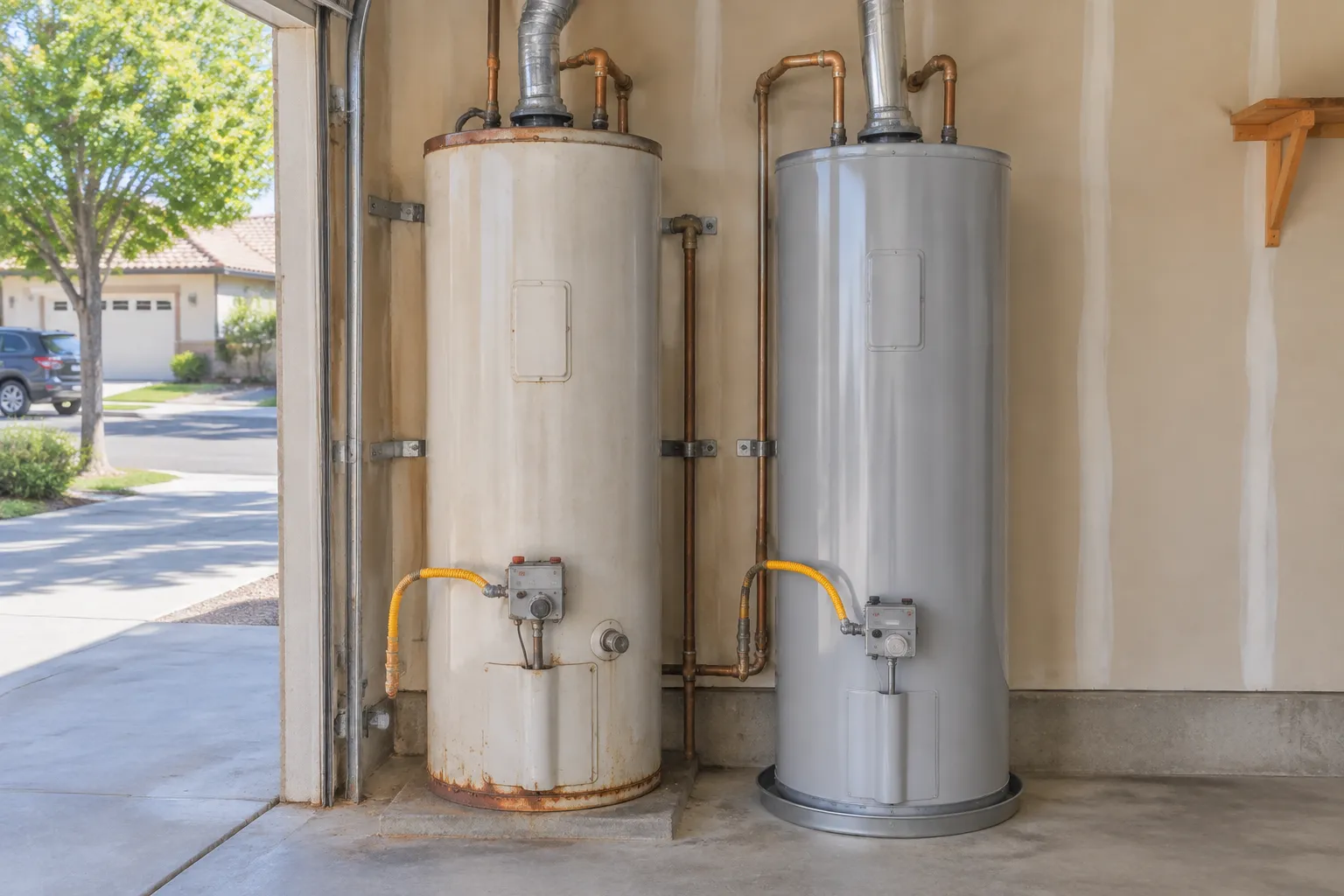
A standard tank water heater usually lasts about 10 to 15 years, according to the US Department of Energy, and a tankless unit can last up to 20 years with upkeep. Age is only one factor. Water quality, sediment and maintenance decide whether yours is on the early or late side. For the full range of jobs, see water heater repair and replacement.
How many years will a hot water heater last?
Plan on 10 to 15 years for a tank water heater and up to 20 for a tankless unit, per the US Department of Energy. The Department's own rulemaking research found no difference in lifetime between heat pump and standard electric tank models. These are typical figures, not promises.
| Type | Typical lifespan | What usually fails |
|---|---|---|
| Gas tank | 10 to 15 years | Tank corrosion, thermocouple, gas control |
| Electric tank | 10 to 15 years | Elements, thermostats, tank |
| Tankless gas | Up to 20 years | Heat exchanger scale, sensors |
| Heat pump | Similar to an electric tank | Compressor, fans, tank |
A unit that is 12 or more years old and starts to fail is rarely worth a large repair. Many cost guides suggest a rule of thumb: if the repair is more than about half the price of a new unit, replace.
How long does a gas water heater last compared with electric?
Tanks typically last 10 to 15 years. Gas models run hotter at the bottom of the tank, where sediment sits, and that can wear the steel faster. Electric tanks have heating elements that fail and are cheap to swap, which keeps the tank in service longer.
The difference is not fixed. A gas heater in a home with soft water and yearly flushing can outlast an electric one in a home with hard water and no care. The thermocouple on a gas unit, the small safety sensor that proves the pilot is lit, often fails first and costs little to replace, which Fixr's water heater repair guide lists at $150 to $325 with labor. Heating elements on an electric unit often last 6 to 10 years before one burns out. Our page on gas versus electric water heaters compares running costs.
What makes a water heater wear out faster?
Hard water, high temperature settings, a spent anode rod and years of sediment shorten the life of a tank. Each speeds up corrosion or scale inside the steel. The tank is glass-lined, and once the lining cracks and the rod is gone, rust starts and the tank eventually leaks.
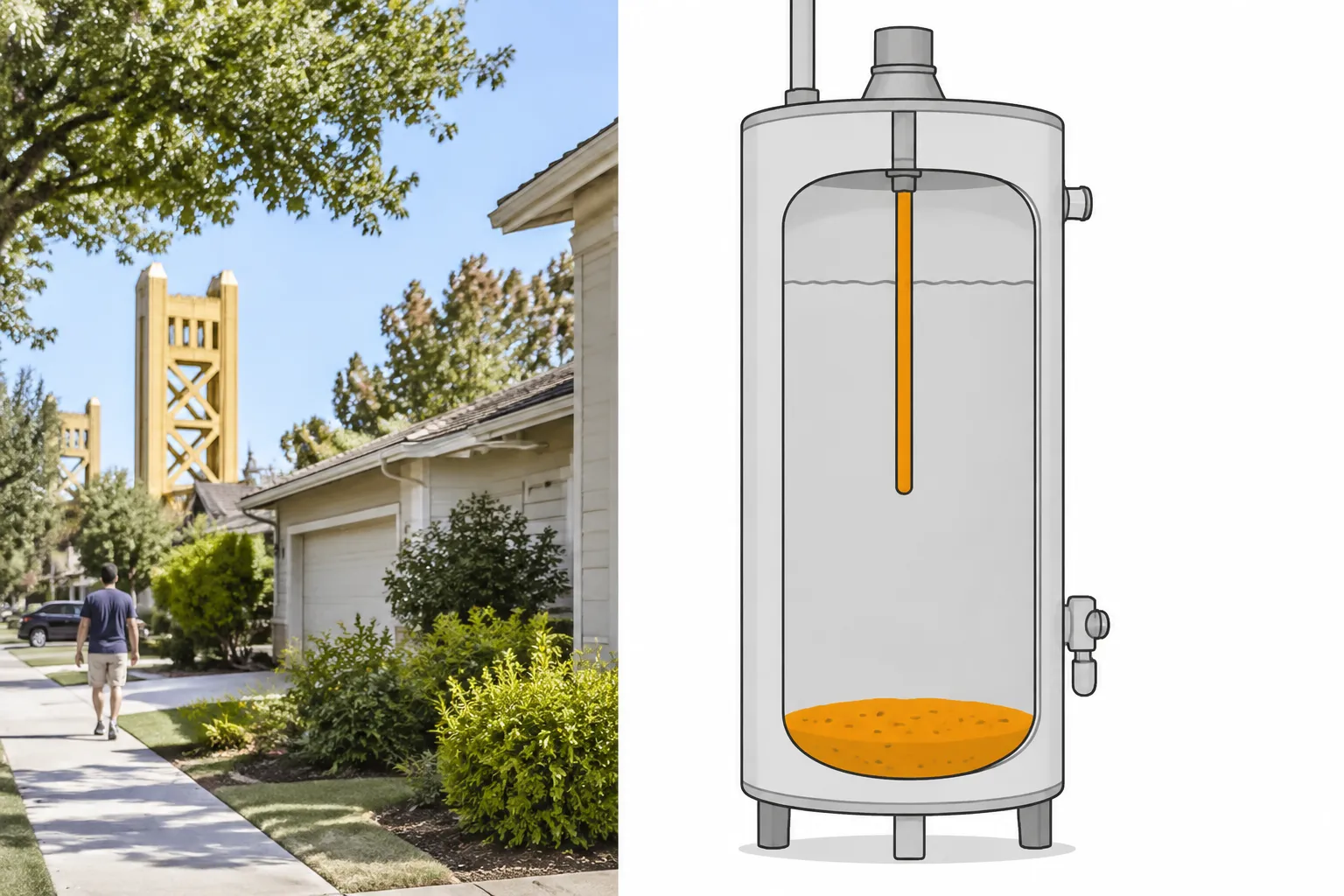
The main factors:
- Anode rod. A magnesium or aluminum rod that corrodes in place of the tank. It is often used up in 4 to 6 years and can be replaced, which is the single best way to extend a tank's life.
- Sediment. Minerals settle at the bottom, insulate the water from the burner or lower element and cause popping noises. Our guide to flushing a water heater shows how.
- Temperature. Running the thermostat much hotter than 120 degrees speeds corrosion and raises scald risk.
- Water quality. Hardness varies by supplier and neighborhood in the Sacramento area. Your water utility publishes a water quality report that lists it.
- Installation. Missing expansion tanks, undersized venting or a unit squeezed into a hot closet all add wear.
How do I know my water heater is near the end?
The usual signs are age past 10 years, rust-colored hot water, rumbling or popping from the tank, water pooling at the base, and a drop in hot water volume. One sign alone is not a verdict. Two or three together, on a unit past 10 years, point to planning a replacement.
Find the age on the data plate. The serial number often encodes the month and year of manufacture, with a letter for the month and two digits for the year, though each brand uses its own format. The manufacturer's site or manual explains it. If you cannot read it, a plumber can.
If the unit leaks from the tank itself, do not wait. See our page on a leaking water heater for what to do in the first minutes.
How often should a water heater be serviced?
Once a year is the usual advice: flush a few gallons to clear sediment, check the temperature and pressure relief valve, look at the connections and venting, and test the thermostat setting. Replace the anode rod every few years if the tank is meant to last beyond 10.
A yearly service by a plumber typically runs $100 to $250. You can do the flush and the visual check yourself, but gas connections, venting and anything electrical are best left to a local specialist. California requires a contractor with a CSLB license for jobs of $1,000 or more, which covers a replacement but usually not routine service. Keep a note of the date so you know how old the heater is next time.
How long does it take to replace a water heater?
A standard like-for-like swap takes about 2 to 4 hours of work. Moving the heater, changing from gas to electric, adding venting, or bringing a gas line or circuit up to code can take a full day or more. The permit inspection may happen at a separate time.
Sacramento lists water heater permits and fees on the City's building pages, and the plumber usually arranges them. New and replacement heaters must also be braced against earthquakes under California Health and Safety Code section 19211, so a replacement should include straps. For prices, see water heater replacement cost. The newest units may also be a heat pump model, which has its own heat pump water heater cost.
Should I repair it or replace it?
Repair a heater under about 8 years old when the fault is a part: a thermostat, element, thermocouple, valve or connector. Replace one past 10 to 12 years when the tank leaks, the repair is a big share of a new unit's cost, or hot water has become unreliable. A unit in between depends on the quote.
Ask a plumber to give both numbers on one sheet, repair and replace, so you can compare. Look also at running cost: a newer unit can use less energy, and the savings count over its life. Read about tank versus tankless before you pick the replacement type, and use the homepage to find other guides for your house.
Questions people ask
How long does a water heater element last?
An electric heating element commonly lasts 6 to 10 years, longer in soft water and shorter where scale builds up. A failed element is a small repair, which Fixr's water heater repair guide lists at $200 to $750 with labor, and the tank is fine.
How long does a water heater thermocouple last?
A thermocouple on a gas unit often lasts 5 to 10 years before it weakens and the pilot will not stay lit. Replacing one is a quick, inexpensive job, but it involves a gas appliance, so leave it to a local plumber.
How long does a 75 gallon or 6 gallon water heater last?
Size matters little. A large 75 gallon tank follows the same pattern, and a small 6 gallon point-of-use unit often lasts a similar or slightly shorter time, because its smaller anode rod and tank wear out faster. Water quality and upkeep matter more.
How long does it take for a hot water heater to reset?
If a high-limit safety switch tripped, the reset button on an electric unit works at once, and the tank then needs time to heat: roughly 1 to 2 hours for a full tank. If it trips again, call a plumber, because a switch that keeps tripping signals a fault.
What should I ask before I hire someone to replace a water heater?
Ask what the quote includes: permit, earthquake straps, haul-away, new connectors and venting. Ask for the contractor's CSLB license number and check it on the board's site. Ask how long the old and new units' warranties last and what they cover.
Sources used
- California Health and Safety Code section 19211 (water heater bracing)
- City of Sacramento water heater permit and fee page
- Manufacturer owner's manuals and warranty terms for gas and electric tank water heaters, reviewed November 2026
- Water Heater Repair Cost, Fixr (updated August 2025)
- How Much Does Water Heater Installation Cost, This Old House (updated June 2026)
Last changed