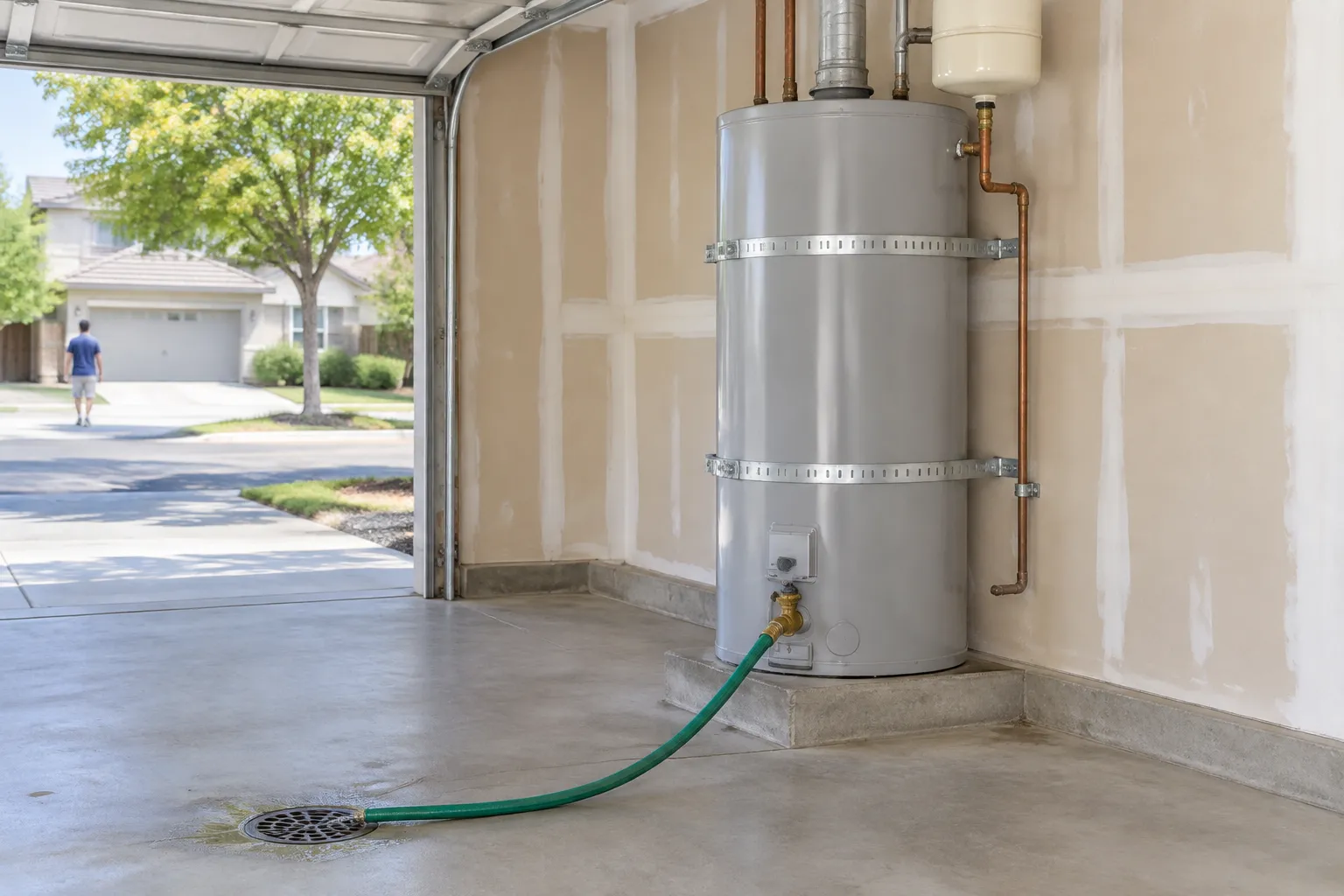
To flush a tank water heater, turn off the power or set the gas control to pilot, close the cold inlet, attach a hose to the drain valve at the bottom, open a hot tap upstairs, and let the tank drain until the water runs clear. Then close the drain, refill, and restore power. It takes about an hour, and Fixr's water heater repair guide lists $100 to $250 for a professional inspection, flush and cleaning. For related jobs, see water heater repair and replacement.
Why flush a water heater at all?
Minerals in water settle as sediment on the floor of the tank. A layer insulates the water from the burner or lower element, so the unit works harder, runs noisy and wears faster. Flushing clears most of it and can restore hot water volume, as long as the drain valve and tank are still sound.
Signs of sediment: popping or rumbling as the water heats, a fall in hot water volume, and rusty or cloudy water at the hot tap. Flushing will not fix a tank that is already leaking or a burner that is failing. If your unit is past 10 to 12 years, see how long a water heater lasts before you spend time on it. Flushing an old, heavily scaled tank can disturb the sediment and expose a leak that was sealed by crust. Be ready to replace it.
Water hardness varies across the Sacramento area, so check your water utility's published quality report. Soft water means less sediment and less urgency.
How often should you flush a water heater?
Once a year suits most homes. Water that is harder than average, or a unit that has never been flushed, may need it every six months for a first couple of rounds. Soft water can stretch the interval. Some manufacturers' manuals give their own interval, so read the one for your model.
A half-flush, draining a few gallons from the valve, is a lighter version you can do more often. If you have never flushed a heater that is eight years old or more, expect the drain valve to clog with chunks. Do not force it. A plastic valve can crack, and the repair is then a replacement valve rather than a flush.
What do you need before you start?
You need a garden hose long enough to reach a floor drain or the yard, a screwdriver or valve key, a bucket, and gloves. Allow an hour and make sure nobody will use hot water. Check that the drain valve is a standard hose-thread type and that the hot water will not run onto a plant bed or a neighbor's lawn.
Before you begin:
- Know where the cold inlet valve, the gas control or breaker, and the drain valve sit.
- Read the label on the tank: some indirect and specialty units, such as those fed by a boiler, have a different drain and shutoff procedure. An indirect unit's flush often follows the boiler maker's manual.
- Keep children and pets away. Water near the drain can still be hot enough to scald.
Gas and electrical hookups are regulated work in California, so do not disconnect or alter them. Turning a control dial or flipping a breaker for a flush is fine.
How do you flush a water heater, step by step?
Turn off the power or gas, close the cold inlet, connect the hose to the drain valve, open a hot tap, open the drain, flush until clear, then close everything and refill before turning the power back on. The order matters, especially the last step, because a hot element in an empty tank burns out.
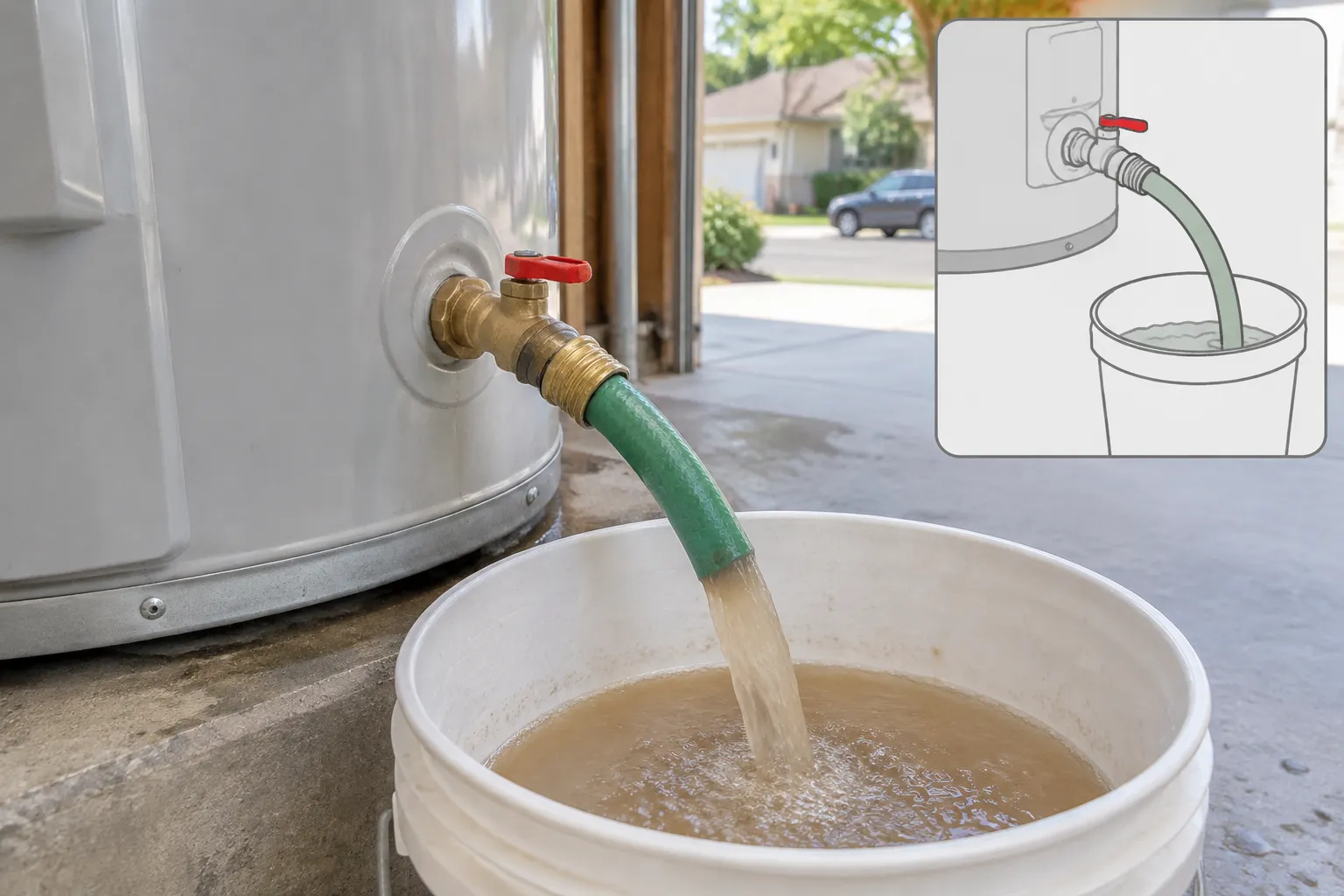
- Shut off heat. Electric: switch the breaker off. Gas: turn the control to pilot or off.
- Close the cold inlet valve on the pipe above the tank.
- Attach the hose to the drain valve near the bottom and run it to a drain or the outdoors.
- Open a hot water tap at a sink on a higher floor. This lets air in so the tank can drain.
- Open the drain valve. Expect the first water to be hot and may carry grit.
- Let it run until the water is clear. A 40 to 50 gallon tank takes 20 to 40 minutes to empty.
- Briefly open the cold inlet to stir the bottom and flush loose sediment, then close it again. Repeat once or twice.
- Close the drain, remove the hose, open the cold inlet and let the tank fill. When water runs steadily from the hot tap, close it.
- Restore power or relight the pilot following the label on the heater.
If the heater has an old or leaking drain valve, shut off the cold inlet and stop. A plumber can replace the valve.
Can I replace a water heater element or the heater myself?
Replacing an electric element is a task some homeowners do, with the power off and the tank drained. Replacing a whole water heater is a different matter: water heater installation involves gas, venting or a 240-volt circuit, a permit and earthquake strapping. Most households hire a local plumber for it.
California requires a contractor with a CSLB license for jobs of $1,000 or more in labor and materials, and a full water heater replacement usually passes that threshold. The City of Sacramento handles water heater permits and fees on its building pages, and the new unit must be braced under Health and Safety Code section 19211. Ask the City whether an owner can pull a permit for work on their own home before you plan a DIY swap.
For cost on the bigger job, see water heater replacement cost. If your unit is electric, the guide on a 50 gallon electric water heater covers elements and sizing.
How much does it cost to have a water heater flushed?
Fixr's water heater repair guide (updated August 2025) lists $100 to $250 for a professional inspection, flush and cleaning, and says some people pay more for a full flush. Many plumbers do it as part of an annual maintenance visit with a safety check of the relief valve, venting and gas connections.
If the unit is old, a flush can lead to a repair. Ask the specialist to tell you before work starts if the drain valve or tank looks poor, and what the next step would cost. Prices here come from Fixr, Sacramento prices vary, and the local specialist quotes the real price. You can compare options on the homepage or via the guides list.
What should you check while the tank is empty?
While you are there, look at the anode rod, the relief valve and the connections. Test the relief valve by lifting its lever briefly: it should discharge water and stop. Look for rust streaks, white mineral crust at fittings and moisture at the base. Any of these can indicate that the unit is nearing its end.
If the relief valve does not seat after testing, or it drips, see our page on pressure relief valve replacement. Take care testing the valve: hot water will come out of its pipe.
Questions people ask
How long does it take to flush a water heater?
Plan on 45 to 90 minutes for a 40 to 50 gallon tank. Draining takes 20 to 40 minutes and refilling about 15. A heater that has never been flushed may clog and take longer, and a plumber will usually finish within an hour or two.
How many times should you flush a water heater?
Once a year is typical. On a first flush of an old heater, repeat the stir-and-drain step two or three times until the water is clear. If it is still cloudy after that, stop and ask a specialist to look at the tank.
How do you flush sediment from a water heater?
Drain the tank through the bottom valve, then open the cold inlet for short bursts to stir the sediment so it leaves with the water. Keep the hose open while you do this. A tank with heavy, hard scale may need a plumber's pump or a descaling product approved for that model.
How do you flush an indirect water heater?
An indirect heater is heated by a boiler loop and has its own tank. Flush the tank side from its drain valve in much the same way, but follow the boiler and tank manuals for isolating the loop, and let a plumber handle any work on the boiler side.
Do I need to be home for a flush?
For a plumber visit, yes, or someone must give access to the heater. It takes up to an hour or two, and you will be without hot water for part of that time. Ask what time window the specialist expects.
Sources used
- Manufacturer owner's manuals for gas and electric tank water heaters (flushing and maintenance sections), reviewed November 2026
- City of Sacramento water heater permit and fee page
- California Health and Safety Code section 19211 (water heater bracing)
- Water Heater Repair Cost, Fixr (updated August 2025)
Last changed