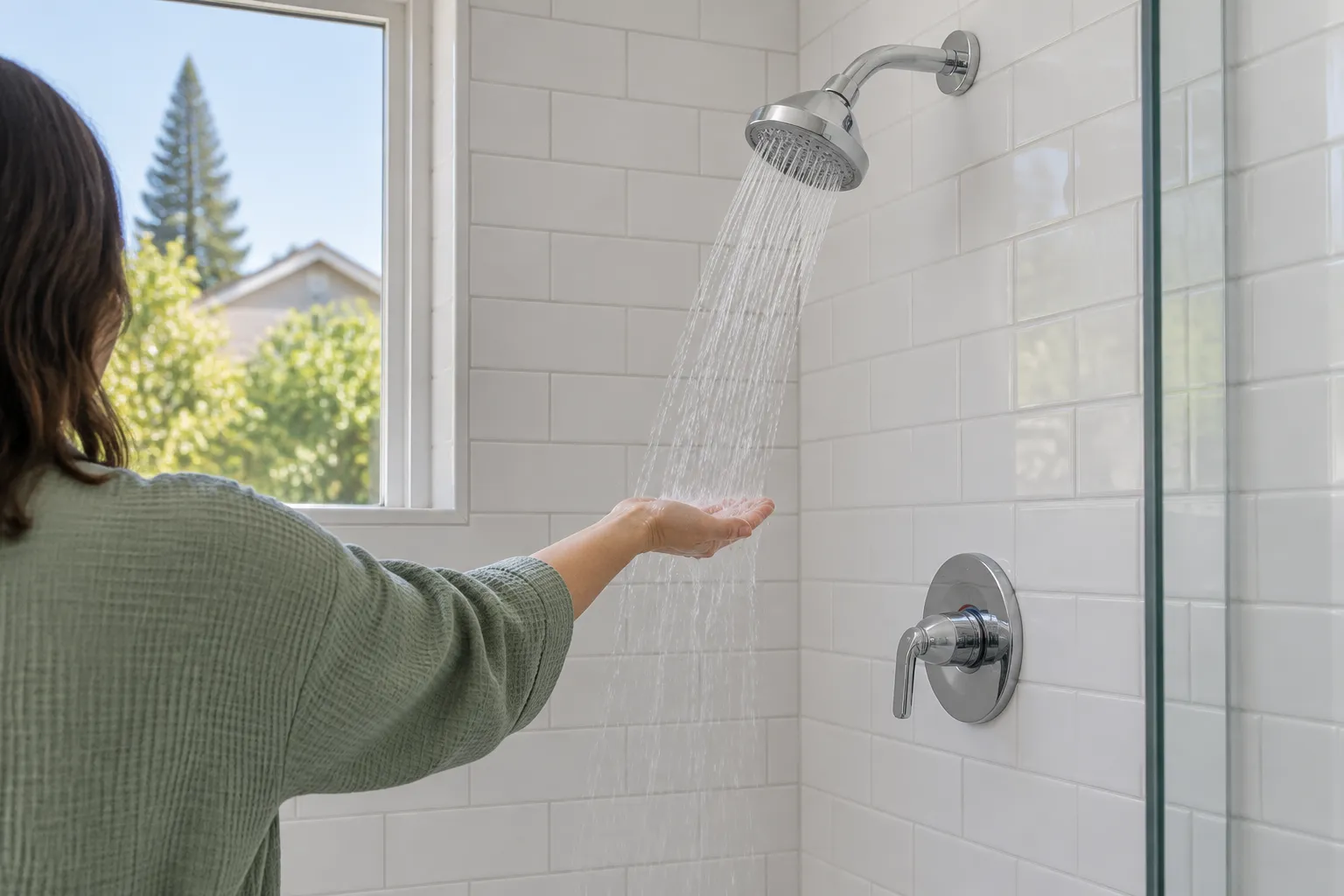
A hot water heater that is not working usually shows one of five symptoms: no hot water at all, lukewarm water, hot water that runs out fast, noise, or a leak. Each points to different parts. Many fixes are an hour's work, and Fixr's water heater repair guide lists $150 to $750 for repairs, while a failed tank means replacement. For the wider list of jobs, see water heater repair and replacement.
Which symptom does my hot water heater have?
Match your symptom to the likely cause before you touch anything. The table covers both gas and electric tank heaters. If you have no hot water at all, our guide to no hot water has a longer set of first checks.
| Symptom | Likely cause (gas) | Likely cause (electric) |
|---|---|---|
| No hot water | Pilot out, thermocouple, gas supply | Breaker, reset button, upper element or thermostat |
| Lukewarm water | Thermostat set low, gas control, sediment | Lower element, thermostat, sediment |
| Runs out fast | Sediment, dip tube, undersized tank | Lower element failed, sediment, dip tube |
| Popping or rumbling | Sediment layer | Sediment on elements |
| Water at the base | Tank, fitting or relief valve | Tank, fitting or relief valve |
| Rusty hot water | Anode rod gone, tank corroding | Anode rod gone, tank corroding |
If you see water on the floor, close the cold inlet, turn off the power or gas, and read about a leaking water heater before anything else.
What can I safely check on my own?
You can check the breaker, press the reset button with the power off, confirm the thermostat is set near 120 degrees, make sure the cold inlet valve is open, and look for drips. You can flush a few gallons from the drain valve. That is the safe limit: gas controls, venting and wiring are not for guessing.
For gas, you can relight a standing pilot if the manual shows how and there is no gas smell. If the pilot will not stay lit, the cause is usually a worn thermocouple or a draft, and further work on a gas appliance belongs to a local plumber. If you smell gas, leave the house, call 911, then the PG&E gas emergency line.
For electric, the heater runs on 240 volts. Opening the access panel without switching the breaker off and testing the wires is how people get shocked. If you are not comfortable with a multimeter, stop at the reset button.
Why is my hot water heater lukewarm or running out fast?
Lukewarm water usually means a thermostat set too low, a failed lower element on an electric unit, or a gas burner that is not firing at full strength. Hot water that runs out fast often means sediment, a failed lower element, a broken dip tube, or a tank too small for the household.
Sediment is the cheapest to deal with. A yearly flush clears minerals that insulate the water from the heat; see how to flush a water heater. A broken dip tube is a plastic tube that sends cold inlet water to the bottom of the tank. When it cracks, cold water mixes into the hot outlet. A plumber can replace it, and it matters more on older units.
If your household has grown, size may be the issue. Read about first hour rating in the 40 gallon gas water heater guide or the 50 gallon electric guide. Sacramento summers also make inlet water warmer, so a tank that seems short in winter may seem fine in July.
What do the noises and the rusty water mean?
Popping, rumbling or hissing as the water heats is almost always sediment boiling in a layer at the bottom of the tank. Rusty or brown hot water, while cold water is clear, usually means the anode rod has worn out and the tank is starting to corrode. Both are signs to act soon, not to ignore.
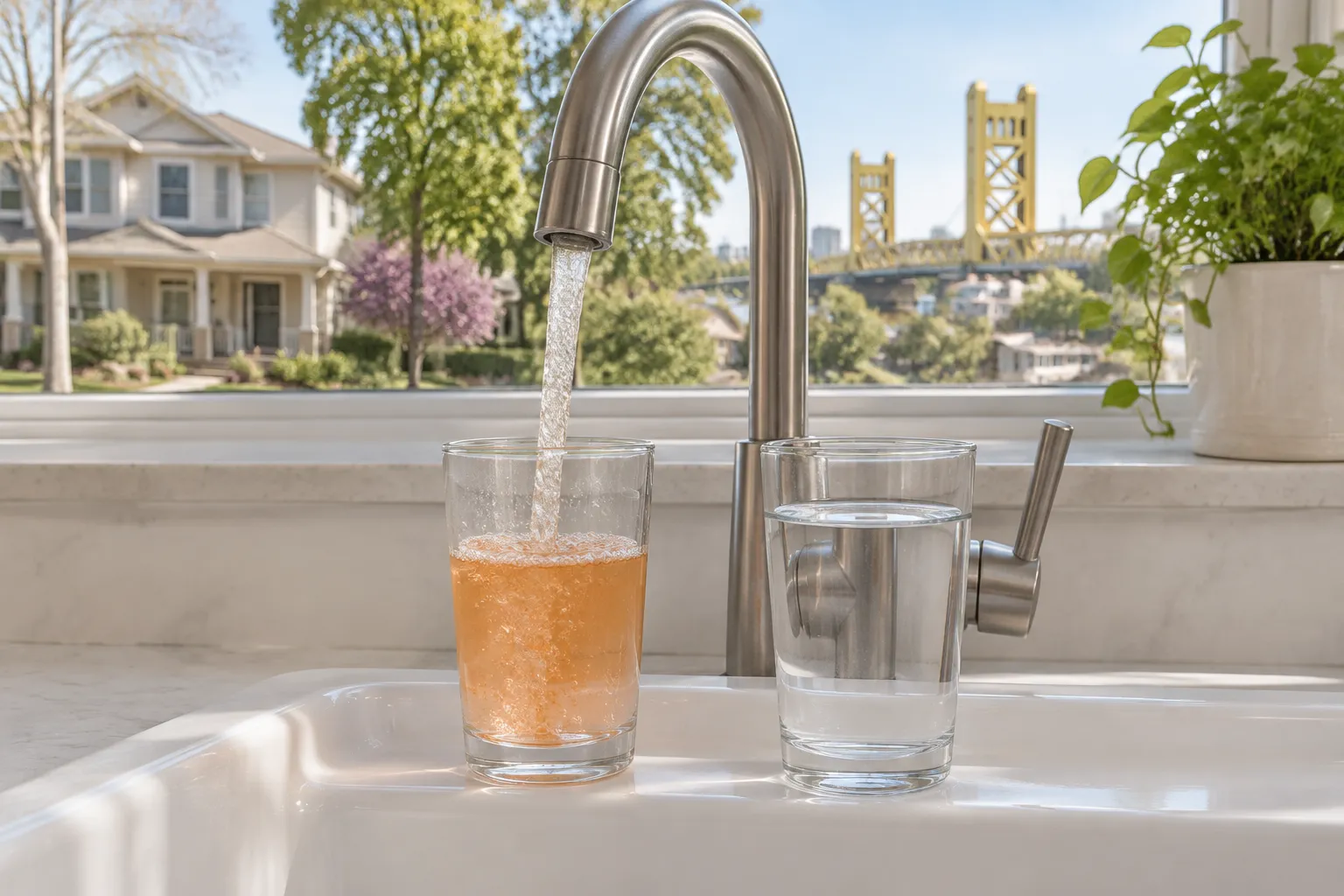
A flush often quiets a noisy tank. If the noise returns within weeks, or the sediment is hard scale, the tank may be too far gone. Rusty hot water, together with age past 10 years, is a reason to plan a replacement. An anode rod can be replaced if the tank is still sound, which a plumber can check. Metallic taste or sulfur smell can have other causes, such as the anode reacting with bacteria. A plumber can often fix it by changing the rod type, so mention it.
If you hear a loud bang or see steam from the relief valve pipe, turn the heater off and call a plumber at once. Learn more in pressure relief valve replacement.
How much does it cost when a hot water heater stops working?
Fixr's water heater repair guide (updated August 2025) says repairs cost $150 to $750, with an average of $450. It lists a thermostat at $100 to $250, a heating element at $200 to $750, a thermocouple at $150 to $325, a relief valve at $100 to $250 and a gas valve at $150 to $300. This Old House's water heater cost guide (updated June 2026) puts a replacement at $1,200 to $2,300 installed. Sacramento prices vary, and a local specialist quotes the real price after seeing the unit.
| Job | Typical range |
|---|---|
| Diagnosis and reset | About $50 call-out fee, often waived if you hire them for the repair (Fixr) |
| Element or thermostat | $200 to $750 for an element, $100 to $250 for a thermostat |
| Thermocouple or igniter | $150 to $325 for a thermocouple |
| Gas control valve | $150 to $300 |
| Replacement, installed | $1,200 to $2,300 (This Old House) |
For a replacement, see water heater replacement cost. If the unit is a specific brand, read A. O. Smith water heater repair for how to use the data plate and manual.
Should I repair or replace a hot water heater that stopped working?
Repair a heater under about 8 years old when the fault is a part. Replace one past 10 to 12 years when the tank leaks or the repair costs about half the price of a new unit. Ask for both prices so you can compare, and consider running costs, since newer units can use less energy.
For age and lifespan, see how long a water heater lasts. Replacement is regulated work in California: a contractor with a CSLB license is required for jobs of $1,000 or more in labor and materials, the City of Sacramento lists water heater permits and fees on its building pages, and new heaters must be braced under Health and Safety Code section 19211. The plumber normally handles the permit. You can browse other guides from the homepage.
Questions people ask
How long does hot water heater repair take?
A reset, relit pilot or thermostat adjustment takes minutes. Most part repairs take one to two hours in one visit. A replacement takes about half a day. An older model's part may need ordering, which can add a day or two.
What should I ask before I hire someone to fix a hot water heater?
Ask for the CSLB license number and check it online. Ask what the visit fee covers, whether it goes toward the repair, and for both a repair price and a replacement price. Ask what warranty comes with parts and labor.
Do I need to be home for the repair?
Yes, or someone should be, to give access and approve the quote. Water heaters sit in garages, closets and attics, so clear a path to the unit before the visit.
Is it safe to leave a hot water heater that is not working?
Usually yes if there is no leak or gas smell: turn the heater off and use the stove for hot water until it is fixed. A leak, gas smell or hot water from the relief valve is not safe to leave, so turn the heater off and call a plumber.
Sources used
- Manufacturer owner's manuals and troubleshooting charts for gas and electric tank water heaters, reviewed November 2026
- City of Sacramento water heater permit and fee page
- California Health and Safety Code section 19211 (water heater bracing)
- Contractors State License Board
- Water Heater Repair Cost, Fixr (updated August 2025)
- How Much Does Water Heater Installation Cost, This Old House (updated June 2026)
Last changed