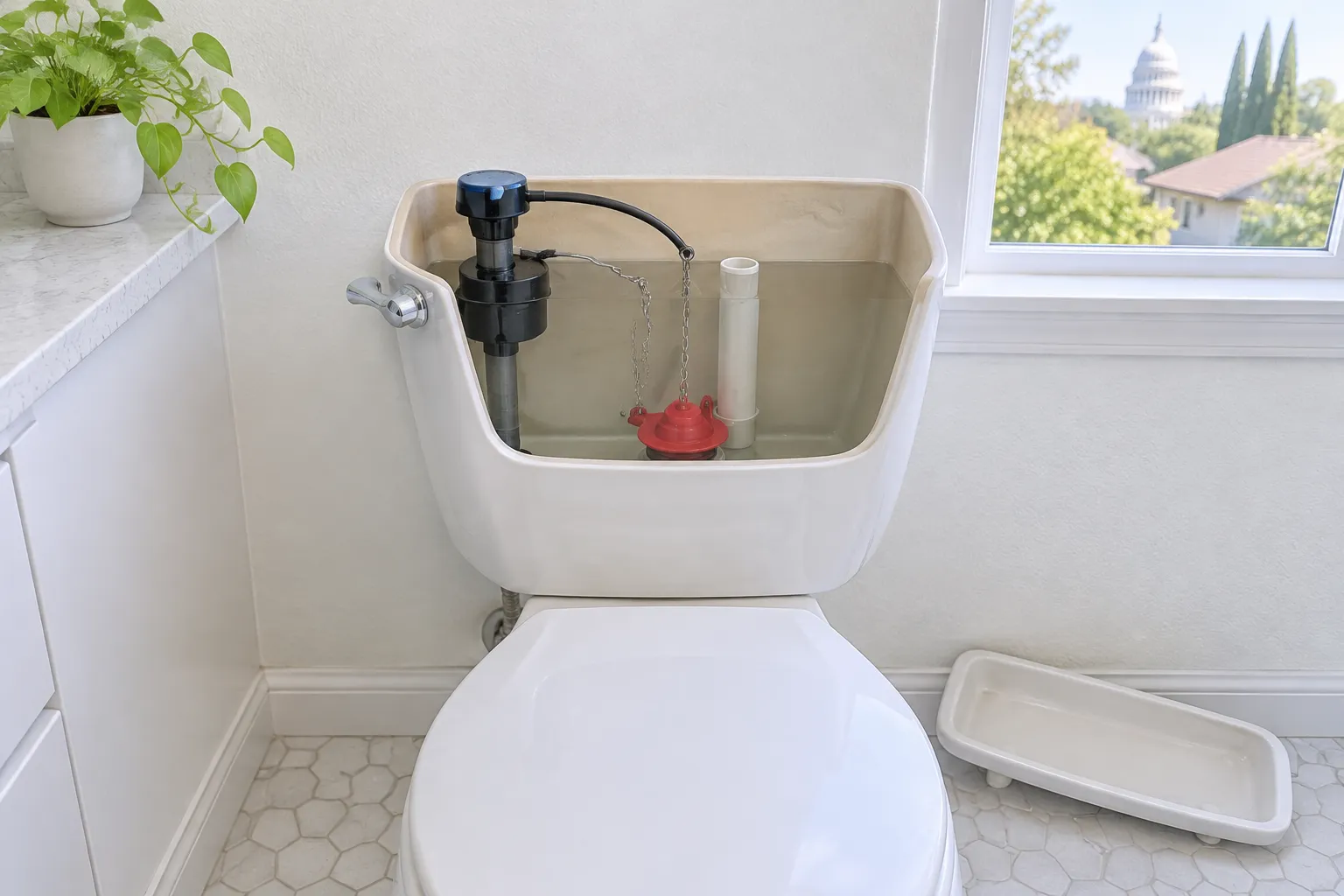
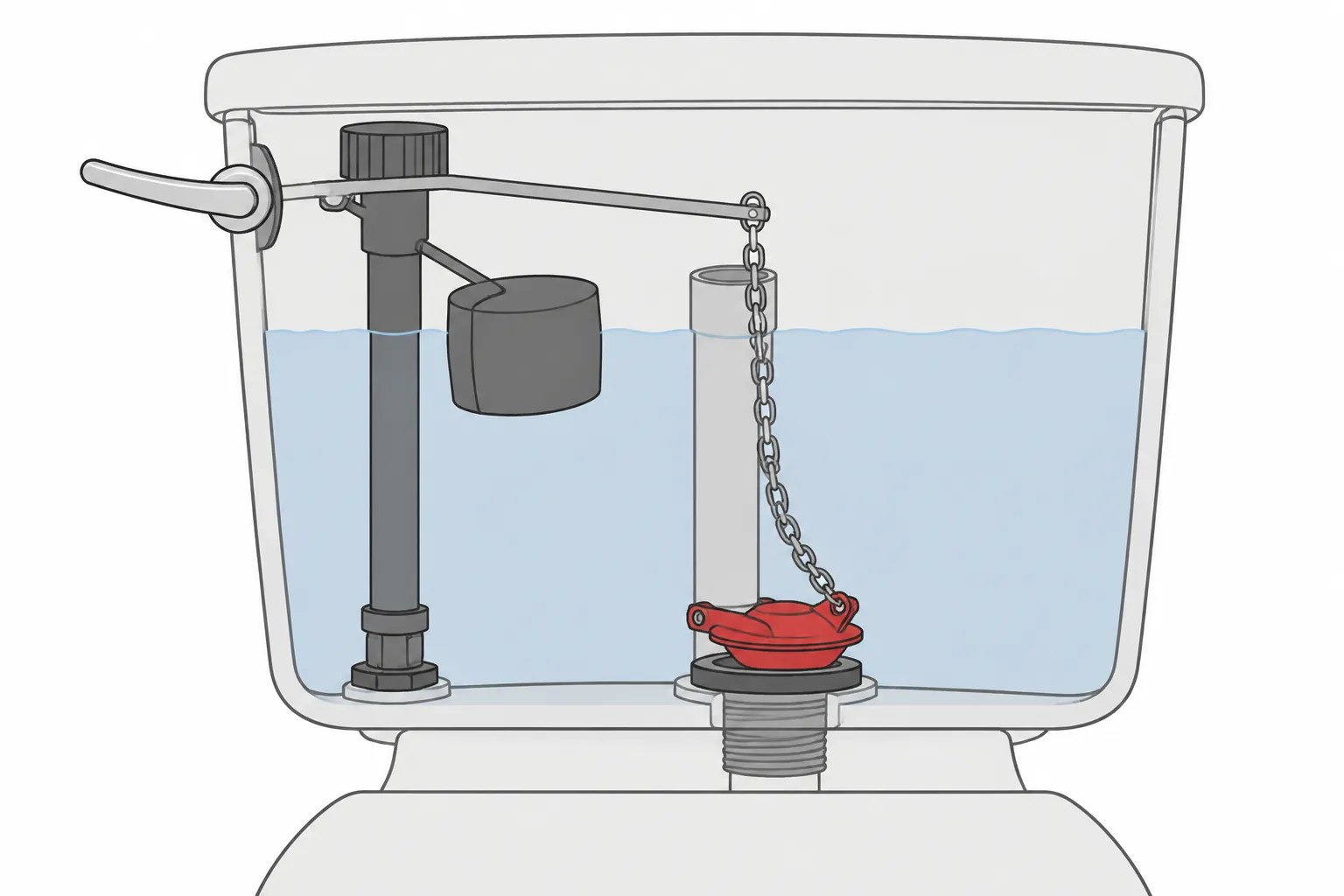
To repair a running toilet, lift the tank lid, flush and watch what the water does. If the water drains out slowly into the bowl, the flapper is leaking. If the water level climbs to the top of the overflow tube, the fill valve is not shutting off. If the chain is tangled or too tight, the handle is holding the flapper open. Replace or adjust that one part.
This page is the repair walk-through, part of the wider toilet repair guide. If you want to understand what each symptom means before touching anything, read why a toilet bowl keeps running. If the fill valve is the culprit, the dedicated guide to repairing a toilet fill valve has the full replacement.
What is the most common cause of a running toilet?
A worn or misaligned flapper causes most running toilets. The rubber seal over the flush valve hardens, warps or gets a mineral crust, and lets water seep from the tank into the bowl. The fill valve then tops the tank up, over and over, so you hear water for no reason. EPA notes that most toilet leaks come from old or worn flappers.
The second most common cause is the chain. If it is too short, it holds the flapper slightly open. If it is too long, it can slip under the flapper and stop it closing. Third is the fill valve, which fails to close at the right level.
Order matters. Check in this sequence because each step takes less time than the next:
- The chain and handle.
- The flapper.
- The water level and fill valve.
- The overflow tube and the flush valve seat.
What do you need before you start?
You need a new flapper that fits your flush valve, a flat screwdriver or adjustable wrench, a sponge and a small bucket. Write down the brand and model on the inside of the tank, and take a photo of the old parts.
A few things worth knowing before you shop:
- Flush valve size. Many toilets use a 2-inch flapper, and newer or high-flow models use 3 inches. Measure the opening, or take the old flapper with you.
- Brand parts. Kohler, American Standard, Toto and others each use their own shapes. A universal kit often fits, but not always.
- Chain, not rod. Most modern toilets use a chain. Some older ones use a rod and ball.
- Water. Close the small valve at the wall before you start. Turn it clockwise until it stops.
If you are unsure, bring the old flapper to a hardware store counter and ask for a match.
How do you fix a flapper that will not seal?
Shut the water off, flush to drain the tank and wipe the rim of the flush valve seat with a cloth. Check the flapper for cracks or slime. Unclip it from the ears on the overflow tube, hook the new one on and attach the chain with about half an inch of slack. Open the valve, and test.
To test a flapper before replacing it, drop a few drops of food coloring into the tank and wait ten minutes. If the bowl turns colored without a flush, the flapper or its seat is leaking. EPA recommends the same dye test. Flush after the test so the tank does not stain.
If a new flapper still leaks, the problem is often the seat, the flat ring the flapper sits on. A pitted or crusty seat can be scrubbed with a non-scratch pad. If it is cracked, the flush valve itself needs replacing, which means removing the tank. At that point many people hire a plumber.
How do you adjust the chain and float?
Chain slack should be about half an inch when the flapper is closed, and the chain should hang straight from the handle arm. Too tight and it holds the flapper open. Too loose and it catches under the flapper. Move the clip to a different link and test with a flush. A float that sits too high lets water run into the overflow tube.
If the fill valve has a float cup that rides up its shaft, a small adjustment screw or clip sets the shut-off height. Turn it so the water stops about an inch below the top of the overflow tube, or at the water line marked on the inside of the tank or on the valve. Follow your valve's own markings, because height varies by model.
Test it:
- Flush once and watch it refill.
- When the tank is full, listen. A faint hiss means the valve is still letting a little through.
- Put a pencil mark at the water line and check again after 30 minutes. If it has risen, the valve is letting water pass.
For an older ball and arm float, bend the arm gently down, or turn the screw at the pivot to lower the level.
What if it keeps running after a new flapper and adjusted chain?
If it still runs, the fill valve is the likely cause, or the overflow tube is cracked or sitting too low. Replace the fill valve, which is a simple job in a kit with instructions, or call a plumber. A toilet that runs only when the pressure rises at night may have a pressure or valve problem.
Quick tests to narrow it down:
- Hold the float up by hand. If the running stops, the fill valve is not closing on its own and needs replacing.
- Water level above the overflow tube? Water pours into the tube. Lower the float or replace the valve.
- Hissing with the tank full? The fill valve seal is worn.
- Banging pipes when the tank fills? That can be a water hammer problem, where a fast-closing valve shocks the line. A plumber can fit an arrestor.
Cracks in the overflow tube let water drain away at the point where the tube meets the tank. A cracked tube usually means the entire flush valve assembly or the toilet is nearing the end of its life. See the price of replacing a toilet before you spend on repeated repairs.
When should you call a plumber for a running toilet?
Call a local plumber if the shut-off valve will not close, the tank bolts leak when you loosen them, the flush valve seat is cracked, or the toilet still runs after a new flapper and fill valve. Also call if the repair means lifting the toilet. Fixr's toilet repair guide lists $60 to $120 to replace a flapper and $60 to $150 for a fill valve.
Complex cases cost more, and Fixr's toilet repair guide puts a full toilet replacement at $400 to $800. A repair that costs more than half the price of a new toilet is worth comparing with replacement, especially for older models that use up to 6 gallons per flush against the 1.28 gallons or less of a WaterSense model.
For repeated failures or a mix of problems, get quotes from local specialists on the quote page. A brief visit can sort several faults at once. For overall hourly pricing, see what a plumber costs per hour.
If you also have a leak at the base, read the guide on a plumber for a toilet leak, since the two problems can sit side by side. The home page lists other plumbing guides for Sacramento homes.
Questions people ask
How long does a running toilet repair take?
A flapper swap or chain adjustment takes 10 to 20 minutes. A fill valve replacement takes 30 to 60 minutes. Most DIY repairs finish within an hour. A plumber usually completes the job in under an hour unless the shut-off valve or flush valve also needs replacing.
How much water does a running toilet waste?
It depends on how fast the leak runs. EPA says household leaks can waste 180 gallons per week, and toilets are often the source. A toilet that runs constantly can waste far more than a slow flapper leak. Fixing it early is one of the cheapest ways to cut a water bill.
Why does my toilet run on its own every few minutes?
A toilet that refills by itself, a so-called phantom flush, has a slow flapper leak. Water drains from the tank into the bowl until the fill valve kicks in. Replace the flapper first and clean the seat. The full symptom guide is on toilet bowl keeps running.
What should I ask before I hire someone to repair a running toilet?
Ask what the price covers, whether parts are included, if there is a visit fee, and how they test the repair. Ask them to check the flapper, fill valve and water level together so you do not need a second visit.
Do I need to be home for a running toilet repair?
Usually yes. The plumber needs access to the bathroom and the shut-off valve, and you should see the test. A short visit means you can wait nearby.
Sources used
Last changed