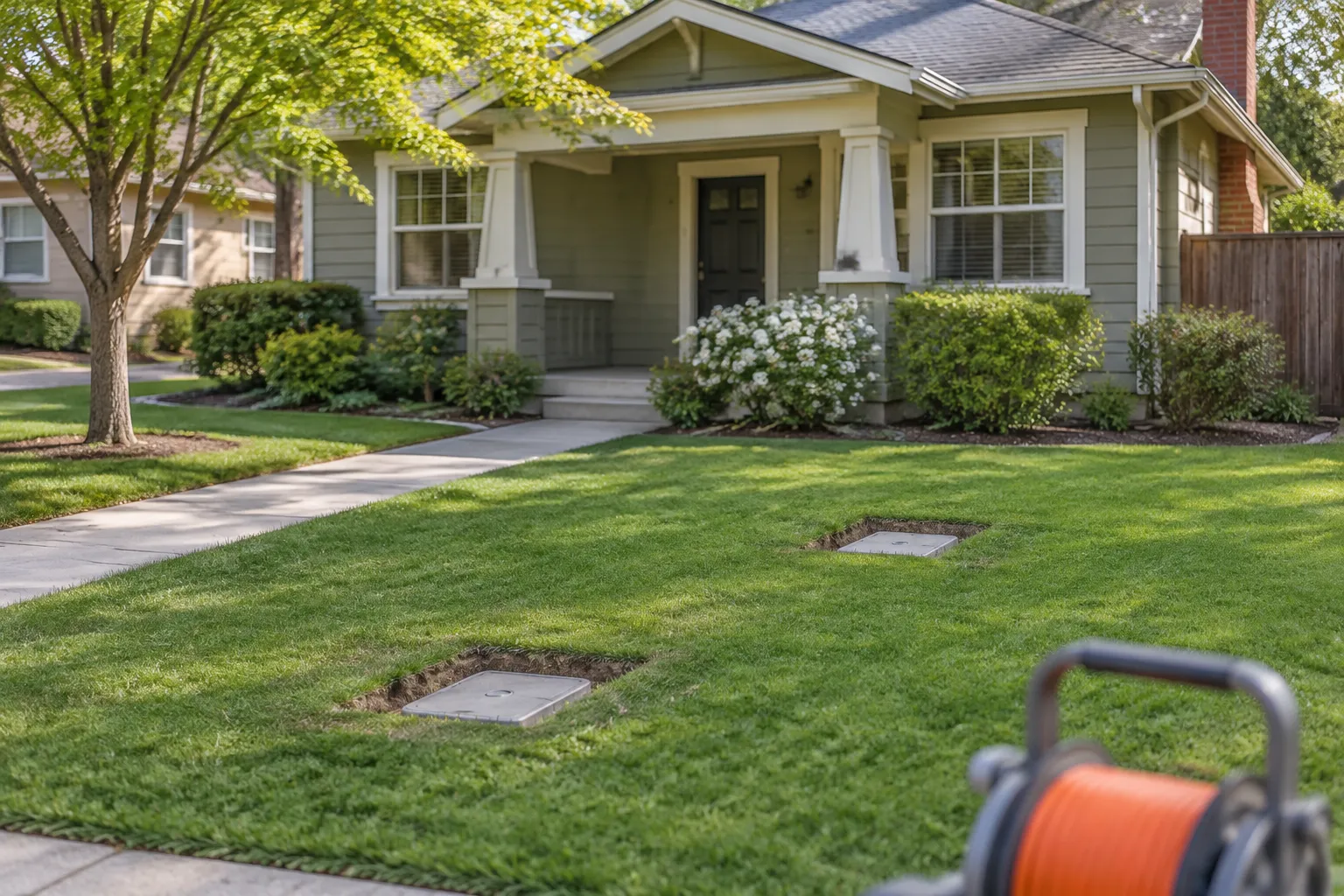
No dig sewer line repair means a plumber fixes or replaces your sewer lateral without opening a long trench. Instead of excavating the whole run, the plumber works through one or two small access holes and either lines the old pipe or pulls a new one through it. It suits pipes that are cracked, rooted or leaking at joints but still in one piece. It does not suit a collapsed pipe.
It is one option within sewer line repair and replacement, and the right one depends on what a camera inspection shows. This guide explains how each method works, which pipes qualify, what it costs in Sacramento and what to settle before anyone starts. If you want the wider site first, the Sactown Plumbing Guide home page links every topic.
What no dig sewer line repair means for your home
Trenchless repair works from inside the pipe or along its existing path. A plumber clears and inspects the sewer lateral, then installs a liner or pulls in a new pipe. The yard, driveway, patio and tree roots you want to keep mostly stay as they are, and the job usually takes a day or two rather than a week.
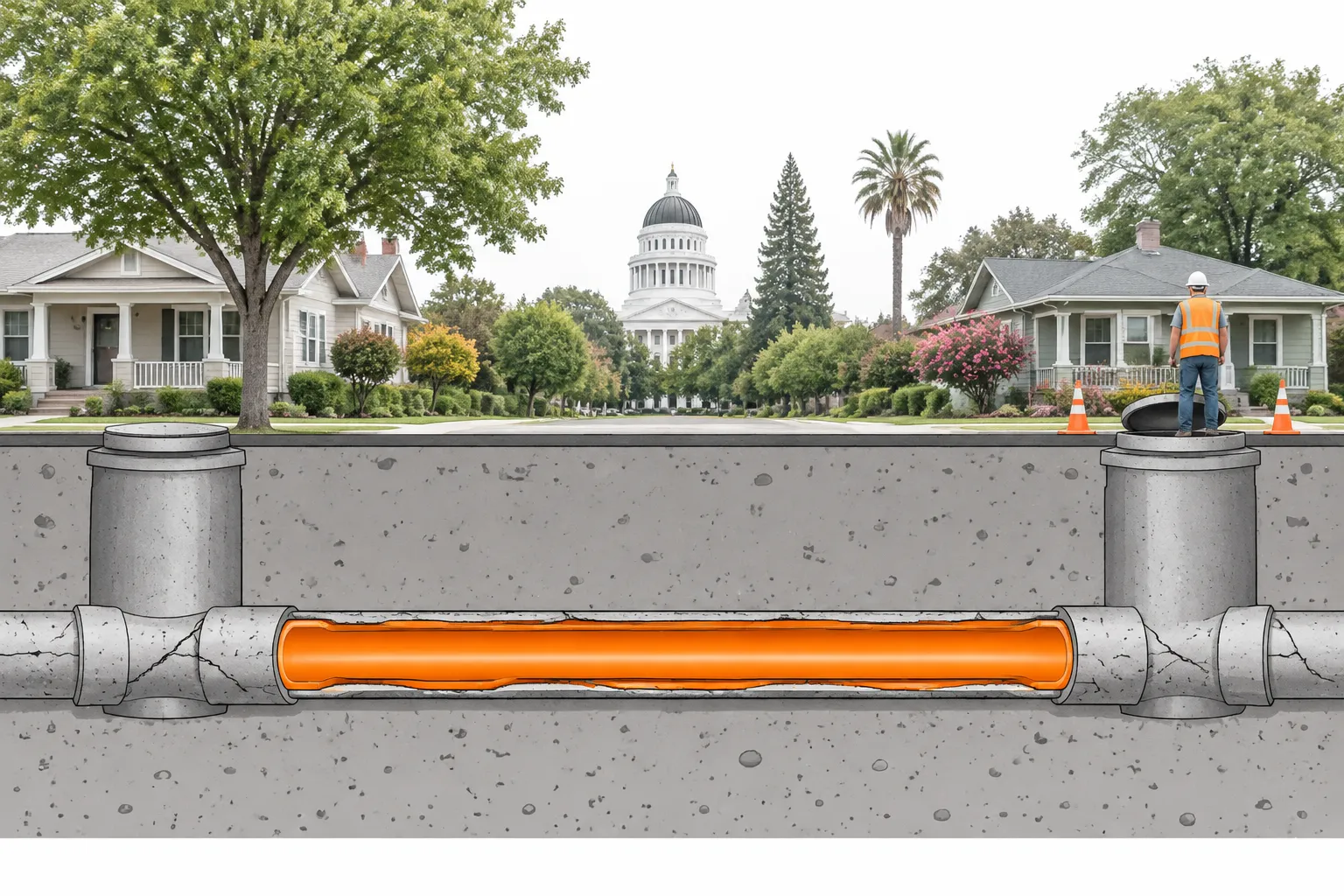
Trenchless technology covers several methods. Two matter for a house sewer.
Pipe lining. In cured-in-place pipe lining, a flexible tube soaked in resin is pulled or inverted into the old pipe, then hardened with heat, steam or light. The result is a smooth, joint-free pipe inside the old one. Because the liner sits inside, the inner diameter drops slightly, though a smooth interior often moves water as well as the old rough pipe did. Short sections can be sealed with a sleeve rather than a full liner.
Pipe bursting. In pipe bursting, a bursting head is pulled through the old pipe, splitting it and pushing the fragments into the surrounding soil while a new plastic pipe follows. It can restore full diameter and even upsize the pipe, and it handles some belly and offset problems that lining cannot. It needs a pit at each end and a place to pull from.
Which pipes qualify. Cast iron, clay, concrete and old Orangeburg (bonded fiber) laterals are all candidates when they still form a continuous path. A collapsed section, a large offset, or a deep belly full of standing water usually rules out lining and may rule out bursting too. Only the camera tells you. Before lining, the pipe must be cleaned, often by hydro jetting, so the liner bonds to a clear surface.
Sacramento has many older neighborhoods with mature trees and original laterals. Roots enter joints in old clay or cast iron, which is the main reason people look at lining. A liner removes the joints, so roots have far less to get into, though they can still press on the pipe from outside.
What to do next
Start with a camera inspection of the lateral, ask for the footage, and confirm where the problem sits. Then get at least two quotes that name the method, the length, the access points and what happens if the pipe turns out not to qualify. Check permits and who owns the failing section before you sign anything.
A practical order:
- Stop making it worse. Cut back on water use if drains are backing up, and do not pour chemical drain cleaners into a line that is already blocked.
- Get the camera look. A plumber runs a camera from the cleanout, notes depth and distance, and records the defects. Ask for a copy. If you need a price for this step, see the plumber leak detection cost page for related inspection pricing.
- Find out who owns the failing section. Where SacSewer is your sewer provider, the upper lateral is the property owner's responsibility and SacSewer handles the lower lateral and main line. SacSewer serves only parts of the City of Sacramento, so confirm which agency serves your address and which part of the line is yours before you hire anyone. The page on residential sewer service from the City of Sacramento is the place to confirm permit requirements.
- Compare quotes. Ask each plumber to price the same footage. The sewer line replacement cost guide shows how the numbers move.
- Plan the day. Water use is limited while the liner cures, and you may be asked to avoid flushing for several hours.
What it costs. This Old House's sewer line cost guide (updated March 2026) says trenchless methods cost $60 to $250 per linear foot, and Fixr lists main sewer line replacement at $50 to $250 per linear foot. Trench replacement can cost less on a short, shallow lateral and more where there is concrete, landscaping or a street to restore, which is why a comparison matters. Sacramento prices vary, and the specialist quotes the real price after the inspection.
Rules to know. California requires a plumbing contractor with a California license (C-36) for jobs where labor and materials come to $1,000 or more, so a lining or bursting job needs a contractor with that license, and you can check the number on the state contractor board site. Sewer lateral work in the City of Sacramento is permitted work, so ask the plumber who pulls the permit and arranges the inspection. Do not hire anyone who says no permit is needed without showing you why.
When to call a plumber business
Call a plumber for any sewer lateral repair, because the work needs a permit, a license, and equipment you cannot rent in practice. Call sooner if drains in several fixtures back up, you smell sewage, or the same clog returns after cleaning. Those point to a damaged line, not a one-off blockage.
Signs that your lateral may need more than cleaning:
- Drains clog again within weeks of being cleared.
- Gurgling or bubbling in toilets and tubs when other fixtures drain.
- A sewer smell in the house or yard. The plumber for sewer smell guide helps you tell a dry trap from a broken line.
- Wet or sunken patches over the line, or unusually green strips of lawn.
- Roots, scale or offset joints seen on a camera.
If the line is only clogged, drain cleaning may fix it for far less. If the camera shows damage, no dig repair is worth pricing next to trench replacement. Ready to compare? Get quotes from local specialists for your address.
Questions people ask
How long does no dig sewer line repair take?
Most no dig jobs take one to two days once the site is prepared. Cleaning and a camera check come first, then the lining or bursting work and curing time. Longer or deeper lines, several access points, and waiting on permits or inspections all add time. Ask the plumber for the full schedule, including when you can use water again.
What should I ask before I hire someone for no dig sewer line repair?
Ask which method they propose and why, for a copy of the camera footage, the length being repaired, how the price changes if the pipe does not qualify, who pulls the permit and what the price includes. Look up the contractor's license number with the state before you sign.
Do I need to be home for no dig sewer line repair?
You do not need to stay all day, but be there at the start to agree access and at the end to review the footage and the finished line. Water use is restricted while the liner cures, so plan showers, laundry and dishwasher use around the schedule you are given.
How long does a pipe liner last?
Makers and contractors often quote a long service life, commonly cited as 50 years, but that depends on installation and pipe condition, and you should treat it as a claim to ask the plumber to back up in writing, not a fact to rely on.
Is no dig repair always cheaper than digging?
No. On a short, shallow lateral in open ground, a trench can cost less. No dig usually wins where digging means cutting concrete, removing trees or restoring landscaping, or where the line runs under a driveway or building.
Sources used
Last changed